
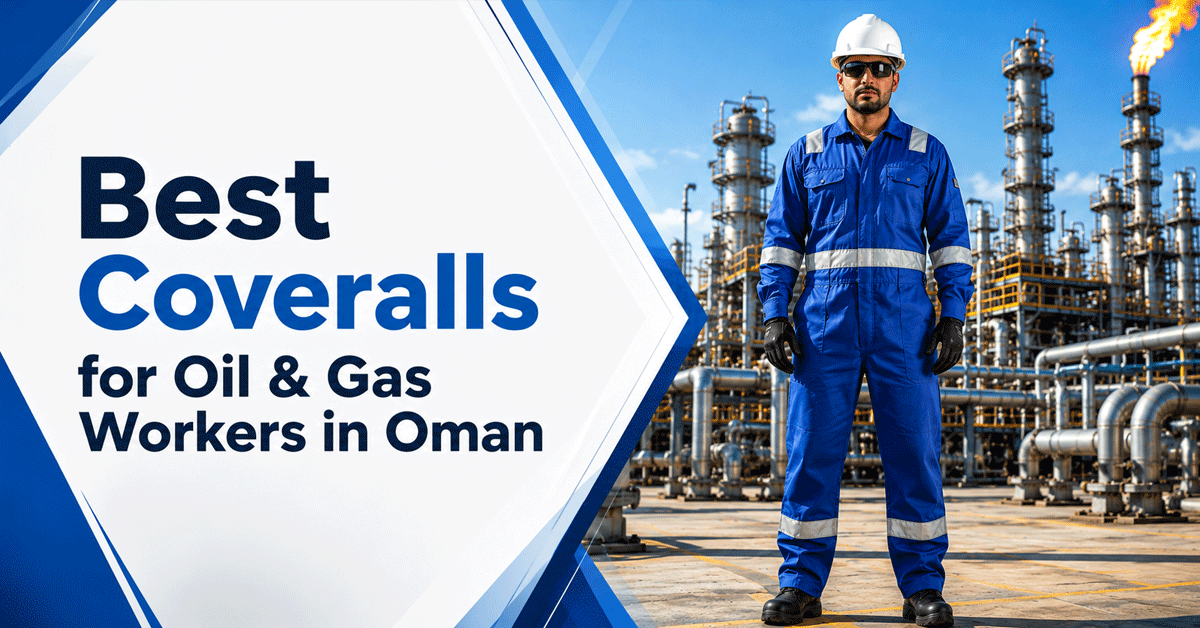
Regular gear does not protect oil and gas workers from the risks they confront. These can include flash fires, heated surfaces, hydrocarbon vapours, static discharge, chemical splashes, moving vehicles and intense outdoor heat. That is why buying the best coveralls for oil & gas workers in Oman is a safety decision and not just a uniform purchase. A good coverall must also give the appropriate level of protection for the worker’s job. And it has to work well for lengthy shifts in the hot and humid atmosphere of Oman. But no single coverall is best for all workers.
An arc-rated garment may be required for a technician working near electrical equipment. Flash-fire protection may be required for a drilling worker. A person working with chemicals might require a chemical resistant suit on top of or instead of a regular FR coverall.
In this guide you will learn:
-
Why specialized oil and gas coveralls are necessary
-
Which materials and protective features matter
-
How Oman’s climate affects coverall selection
-
Which safety standards buyers should check
-
What mistakes employers should avoid
-
How SAMS can support industrial PPE procurement in Oman
Why Oil & Gas Workers Need Specialized Coveralls
Oil and gas sites contain several hazards at the same time. Workers may operate near flammable liquids, pressurised systems, electrical equipment, heavy machinery, pipelines and vehicle routes.
Standard industrial clothing may provide basic coverage. It may not protect the wearer during a flash fire or electrical arc incident.
Protection Against Flash Fire
A flash fire is a fast-moving flame that can occur when a flammable gas, vapour or liquid ignites. The exposure may last only a few seconds but it can cause severe burns. Oil and gas activities with potential flash-fire exposure may include:
-
Opening process equipment
-
Transferring hydrocarbons
-
Gauging tanks
-
Performing maintenance
-
Conducting hot work
-
Starting production equipment
-
Working around valves and pressurised lines
OSHA recommends flame-resistant clothing for some drilling, production and well-servicing tasks that have the risk of flash-fire exposure. It also directs employers to NFPA 2112 and NFPA 2113 for information regarding garment performance, selection use and maintenance.
Fire protective gear won't stop flames. It is designed to be flame resistant with less flame propagation and severity of burn injuries. It should be considered the last line of defense after engineering controls, safe systems of work, gas monitoring, isolation procedures and worker training.
Resistance to Heat and Flames
Oil and gas workers may encounter radiant heat, hot surfaces, welding sparks, process heat or short contact with flames. Certified FR clothing is tested to perform under defined thermal conditions. ISO 11612 for example covers protective clothing designed to protect the body against heat and flame. Its scope includes hazards such as limited flame spread and certain forms of convective, radiant and contact heat.
The coverall must still match the actual hazard. A garment marked as heat-resistant does not automatically protect against every type of flame, molten material, chemical or electrical hazard.
Improved Visibility
Oil and gas sites often contain:
-
Moving trucks
-
Forklifts
-
Cranes
-
Mobile equipment
-
Low-light work areas
-
Night operations
-
Dusty outdoor routes
Reflective tape can make workers easier to see. This is especially important around vehicles and machinery. ISO 20471 sets requirements for high-visibility clothing intended to signal the wearer’s presence during daylight and under vehicle headlights in dark conditions. It includes requirements related to background colour, retroreflection, material area and placement.
Reflective tape alone does not always make a coverall fully compliant with ISO 20471. The complete garment design must meet the required visibility class.
Worker Comfort During Long Shifts
Protection matters, but uncomfortable PPE can create new risks. A heavy, poorly fitted or non-breathable coverall can increase heat strain. It may also restrict movement and make workers less willing to keep the garment properly closed.
NIOSH explains that clothing and PPE can increase the body’s heat load by reducing normal cooling through sweat evaporation. The risk becomes greater when high temperatures, humidity, physical work and heavy PPE are combined. The goal is not to buy the lightest coverall available. The goal is to select the lightest practical garment that still provides the required certified protection.
Key Features of the Best Oil & Gas Coveralls
The best oil and gas coveralls in Oman should be selected through a documented workplace hazard assessment. Buyers should not rely only on colour, fabric weight, product photos or an “FR” label.
Flame-Resistant Fabric
FR fabric is designed to resist ignition and stop burning after the ignition source is removed.
Two common FR material categories are:
-
Flame-retardant-treated fabrics
-
Inherently flame-resistant fabrics
Treated fabrics usually gain their protective properties through a chemical treatment. Inherent FR materials have flame resistance built into the fibre structure.
Both types can provide effective protection when they are properly designed, tested, certified, maintained and used for the correct hazard.
Important standards may include:
-
NFPA 2112 for short-duration thermal exposure and flash-fire protection
-
ISO 11612 for clothing that protects against heat and flame
-
ASTM F1506 for flame-resistant and arc-rated clothing used for electrical hazards
-
Relevant client, operator or project-specific HSE specifications
A certificate should apply to the exact garment model. A general fabric certificate or supplier statement may not prove that the finished coverall meets the required standard.
Buyers should request:
-
Certification documents
-
Test reports
-
Garment model numbers
-
Fabric composition
-
Fabric weight
-
Care instructions
-
Traceability information
-
Details of the issuing laboratory or certification body
Anti-Static Protection
Static electricity can become an ignition concern in areas containing flammable gases or vapours.
EN 1149-5 covers material and design requirements for electrostatic-dissipative protective clothing. Such garments are intended to be used as part of a complete earthed system to reduce the risk of an incendiary discharge.
This point is often misunderstood.
An anti-static coverall:
-
Does not make the worker electrically insulated
-
Does not replace arc-rated clothing
-
Does not protect against electric shock
-
Must normally work with suitable footwear and an effective grounding system
-
May not be sufficient for every explosive atmosphere
Employers should follow the site’s hazardous-area assessment and HSE requirements.
Reflective Tape for Visibility
Reflective tape should be placed where it remains visible from different directions.
Common positions include:
-
Around the upper arms
-
Across the shoulders
-
Around the torso
-
Around the lower legs
For FR garments, the reflective tape, stitching, backing and attachment method should be suitable for the garment’s protective purpose.
Adding ordinary reflective tape to an FR coverall can create a weak point. The tape may melt, burn, detach or reduce the garment’s overall performance.
Where high-visibility certification is required, buyers should check the complete garment classification rather than looking only for reflective strips.
Lightweight and Breathable Materials
Lightweight fabric can improve comfort in Oman’s climate. However, low fabric weight should never be the only buying factor.
A lighter coverall may provide less thermal protection than a heavier garment made from the same fabric system. Performance depends on several factors including:
-
Fibre type
-
Fabric construction
-
Treatment quality
-
Garment design
-
Number of layers
-
Thermal test results
-
Intended hazard
Employers should first identify the required protection. They can then compare certified garments within that protection level.
Practical comfort features may include:
-
Breathable fabric
-
Action-back panels
-
Elasticated side waist sections
-
Gusseted construction
-
Adjustable cuffs
-
Two-way front zips
-
A fit that allows bending and climbing
-
Enough space for required base layers
Do not create unapproved ventilation openings in FR garments. Rolling up sleeves or leaving the front zip open exposes skin and can reduce protection.
Oil and Chemical Splash Resistance
This feature requires careful attention. A normal FR coverall is not automatically a chemical-protection suit. Flame resistance and chemical resistance are different performance properties.
Some garments may have limited liquid-repellent finishes. That does not mean they protect against concentrated acids, solvents, corrosive substances or high-pressure chemical releases.
The correct garment should be selected using:
-
The chemical’s safety data sheet
-
Concentration
-
Exposure time
-
Splash pressure
-
Body area at risk
-
Permeation and penetration data
-
Emergency response requirements
-
Site risk assessment
Flammable contaminants such as oil, grease and solvents can further degrade the effectiveness of FR garments. Contaminated clothing must be cleansed or replaced before reuse on a hazardous job. Never continue using a heavily oil-soaked coverall because the label still says “FR.”
Durable Reinforced Stitching
Oil and gas work involves climbing, lifting, kneeling, bending and contact with rough equipment. Weak seams may open during normal work. A torn coverall can expose the skin and reduce protection.
Look for:
-
Reinforced stress points
-
Strong double or triple stitching where appropriate
-
Secure pocket construction
-
Durable zips and closures
-
Reinforced knees where the task requires them
-
FR-compatible sewing thread
-
Covered metal components
-
Secure reflective tape attachment
Repairs must not introduce non-FR thread, synthetic patches, or unsuitable materials. OSHA guidance notes that damaged FR garments may require special repair methods because ordinary materials including common nylon thread can reduce protection.
Correct Fit and Full Body Coverage
A certified coverall can still fail in practice when it does not fit correctly. A coverall that is too tight may:
-
Restrict movement
-
Pull open at the zip
-
Tear at stress points
-
Reduce the air gap between the fabric and skin
A coverall that is too loose may:
-
Catch on machinery
-
Create trip hazards
-
Interfere with gloves or footwear
-
Make climbing more difficult
Employers should provide a proper size range instead of forcing all workers into a small number of standard sizes. The garment should cover the body when the worker reaches, bends, kneels and climbs.
Types of Coveralls Used in the Oil & Gas Industry
Different jobs require different protective garments. The following are among the most common types of industrial coveralls in Oman.
FR Cotton Coveralls
The term “FR cotton” usually refers to cotton or cotton-rich fabric that has received a flame-retardant treatment. Ordinary cotton is not automatically flame-resistant. Cotton may not melt like some synthetic fibres but it can ignite and continue burning. OSHA notes that the ignition behaviour of cotton and wool depends on factors such as fabric weight, texture, weave and exposure conditions.
Advantages of treated FR cotton may include:
-
Good moisture absorption
-
Familiar feel
-
Reasonable comfort
-
Competitive cost
-
Suitability for many general industrial applications
Possible limitations include:
-
Protective performance depends on the treatment
-
Incorrect laundering may damage performance
-
The garment may shrink
-
Protection may have a stated service-life or wash-cycle limit
-
It may not provide the required arc rating
Always check the manufacturer’s care instructions and certification.
Inherently Flame-Resistant Coveralls
Inherent FR coveralls use fibres that have flame-resistant properties as part of their structure. They are often selected for demanding operations where long-term and consistent FR performance is important.
Potential benefits include:
-
Flame resistance built into the fibre
-
Good durability when properly maintained
-
Options for flash-fire and arc-rated applications
-
Less dependence on a surface treatment
However, “inherent” does not mean indestructible or fireproof.
The garment can still become unsafe when it is:
-
Torn
-
Heavily contaminated
-
Incorrectly repaired
-
Exposed beyond its tested limits
-
Worn with unsuitable non-FR outer layers
The purchasing decision should be based on tested garment performance not fibre marketing alone.
Arc Flash Protective Coveralls
Electrical workers may be exposed to thermal energy from an electric arc.
Arc-rated clothing is different from general FR clothing. All arc-rated clothing is designed to be flame-resistant but not every FR garment has a verified arc rating. ASTM F1506 covers performance requirements for flame-resistant and electric arc-rated protective clothing used by workers exposed to flames and electric arcs.
Arc-rated garments should display an arc rating usually measured in calories per square centimetre. The required rating must be based on the estimated incident energy or another approved electrical hazard assessment method. OSHA guidance states that arc-rated protection should meet or exceed the estimated thermal energy exposure for the task. Do not select an arc-flash coverall by guessing or choosing the highest number without considering the complete PPE system.
Electrical protection may also require:
-
Arc-rated face protection
-
Insulating gloves
-
Hearing protection
-
Safety footwear
-
Balaclavas
-
Switching suits
-
Insulated tools
High-Visibility FR Coveralls
High-visibility FR coveralls combine flame resistance with improved visual detection.
They may be suitable for workers operating around:
-
Tanker loading areas
-
Logistics zones
-
Roadside pipelines
-
Drilling equipment
-
Night operations
-
Ports
-
Heavy mobile machinery
The garment should meet both the required FR performance and the required visibility standard. A bright colour alone does not prove high-visibility compliance. Likewise reflective tape alone does not prove the garment is flame-resistant. Check the labels and certification for both properties.
Why Oman’s Climate Matters When Choosing Coveralls
Oman’s climate creates a difficult PPE challenge. Workers need protection from fire and industrial hazards. At the same time heavy or non-breathable clothing may increase heat strain.
High Temperatures
Oman applies restrictions on certain outdoor work during the hottest summer period. The Ministry of Labour’s current guidance covers the period from 1 June to 31 August with restrictions between 12:30 PM and 3:30 PM for construction sites and exposed locations with high temperatures. Special conditions apply where an approved exception is granted, including cold drinking water, air-conditioned rest areas, first aid supplies and an air-conditioned bus near the worksite. A lightweight coverall can support comfort, but clothing choice alone cannot control heat stress.
Employers also need:
-
Hydration
-
Shaded or cooled rest areas
-
Work and rest schedules
-
Heat-stress training
-
Emergency procedures
-
Worker monitoring
-
Suitable acclimatisation programmes
Humidity
High humidity slows sweat evaporation. This makes it harder for the body to release heat. The risk can increase when workers wear several PPE layers, chemical-resistant clothing, gloves, helmets and respiratory equipment.
NIOSH identifies air temperature, humidity, workload, clothing, PPE and hydration as important factors in occupational heat stress. Employers should assess the complete PPE combination. Testing one coverall in an air-conditioned office does not show how it will perform during outdoor physical work.
Outdoor Exposure
Outdoor oil and gas workers may face:
-
Direct sunlight
-
Radiant heat
-
Dust
-
Wind
-
Sand
-
Abrasive surfaces
-
Sudden temperature changes between indoor and outdoor areas
The coverall should provide enough coverage without creating unnecessary weight. Fabric should also be durable enough to resist normal site wear. An extremely thin garment that tears quickly is not a practical solution for heat.
Long Working Hours
Small comfort problems become serious during a long shift. A tight collar, rough seam, poor zip, restrictive shoulder area or badly placed pocket can affect movement and concentration. Before placing a large order employers should arrange a wearer trial with workers from different roles and body sizes.
The trial should assess:
-
Walking
-
Climbing
-
Kneeling
-
Driving
-
Reaching overhead
-
Using a safety harness
-
Wearing gloves
-
Wearing safety boots
-
Heat comfort
-
Pocket access
-
Toilet access
-
Garment closure during work
Feedback should be documented. Comfort should be improved without reducing certified protection.
How to Select the Right Coverall
Use a structured buying process instead of comparing prices first.
1. Identify the Hazard
List the actual hazards for each role.
These may include:
-
Flash fire
-
Electrical arc
-
Static discharge
-
Chemical splash
-
Welding
-
Low visibility
-
Extreme heat
-
Mechanical abrasion
One department may require several different coverall types.
2. Confirm the Required Standard
Check the operator’s HSE specification, contract requirements, local obligations and workplace risk assessment.
Do not assume that one international standard covers every hazard.
3. Review the Complete Garment
Check more than the fabric.
Review:
-
Seams
-
Thread
-
Zips
-
Press studs
-
Reflective tape
-
Labels
-
Pockets
-
Cuffs
-
Collar
-
Reinforcement
-
Garment sizing
Certification should relate to the complete product.
4. Request Documentation
Before approval, request model-specific certification and test evidence.
Be cautious when a supplier provides only:
-
A general company certificate
-
A fabric brochure
-
An expired test report
-
A certificate for another garment
-
An unclear label photograph
-
A verbal claim of compliance
5. Conduct a Wearer Trial
Order samples in several sizes. Let actual workers test them under controlled working conditions.
A bulk order made without a trial can lead to poor fit, low acceptance and costly replacement.
6. Create a Care and Replacement Programme
Even certified FR coveralls in Oman require inspection and maintenance.
The programme should cover:
-
Laundering
-
Drying
-
Stain removal
-
Repairs
-
Storage
-
Inspection
-
Contamination
-
Replacement
-
Record keeping
There is no universal replacement date for every coverall. The decision depends on the garment, manufacturer’s instructions, exposure, contamination, damage and site policy.
Common Mistakes to Avoid When Buying Oil & Gas Coveralls
Here are the common mistakes that you should avoid while buying oil and gas coveralls:
-
Buying Ordinary Cotton as FR Clothing
-
Confusing FR with Arc-Rated Protection
-
Assuming FR Means Chemical-Resistant
-
Selecting Only by Fabric Weight
-
Ignoring Anti-Static System Requirements
-
Using Non-FR Branding Materials
-
Ordering the Wrong Sizes
-
Washing Coveralls Incorrectly
-
Continuing to Wear Oil-Contaminated Clothing
-
Accepting Supplier Claims Without Evidence
Choosing SAMS for Industrial Coveralls in Oman
SAMS Solutions supplies PPE and industrial workwear for sectors including oil and gas, construction, manufacturing, logistics and maintenance. Its coverall range is marketed to buyers in both the UAE and Oman. SAMS also offers coverall customization options for business and industrial users. For procurement teams the main advantage of working with a specialist PPE supplier is access to a wider selection of:
-
Industrial coveralls
-
FR clothing
-
Safety footwear
-
Head protection
-
Gloves
-
Eye protection
-
Respiratory protection
-
Hearing protection
-
Fall protection equipment
SAMS states that its PPE products are manufactured in ISO-certified facilities and that many products carry CE, ANSI or other relevant certifications. Certification should still be checked for the exact product and application before purchase.
When requesting oil and gas coveralls in Oman from SAMS, provide clear information about:
-
The worker’s job
-
The identified hazard
-
Required standards
-
Fabric preference
-
Required arc rating, where applicable
-
Anti-static requirements
-
Visibility requirements
-
Garment colour
-
Reflective tape layout
-
Logo requirements
-
Quantity
-
Size breakdown
-
Delivery location
-
Required documentation
SAMS can then help shortlist suitable options. Final approval should remain with the employer’s HSE or competent safety team.
Coveralls FAQs
What are the best coveralls for oil and gas workers in Oman?
The best coveralls are garments that match the worker’s documented hazards and site requirements. For many oil and gas roles this may mean certified FR coveralls with anti-static properties, FR reflective tape, durable construction and a breathable design. Electrical workers may also require an appropriate arc rating. Chemical-handling tasks may require separate chemical-protective clothing.
Are normal cotton coveralls suitable for oil and gas work?
Not where certified flame resistance is required. Ordinary cotton can ignite and continue to burn. Choose tested and certified flame-retardant-treated cotton or another approved FR fabric.
What is the difference between FR cotton and inherent FR fabric?
FR cotton normally receives a treatment that gives the fabric flame-resistant properties. Inherent FR materials use fibres with flame resistance built into their structure. Both can be effective. Compare certification, thermal performance, durability, comfort, care instructions and cost over the garment’s working life.
Do oil and gas coveralls need anti-static protection?
Anti-static protection may be required in areas where electrostatic discharge could ignite a flammable atmosphere. The decision should be based on the hazardous-area assessment and site HSE specification.
Does an FR coverall protect against an arc flash?
Not always. A garment must have a verified arc rating suitable for the calculated or assessed incident energy. A basic FR label is not enough.
Are FR coveralls chemical-resistant?
Not automatically. FR performance and chemical protection are separate. Check chemical permeation, penetration and splash test data for the substance being handled.
Can reflective tape be added to FR coveralls?
Yes, but the tape and attachment materials should be suitable for the garment’s FR requirements. Where certified high visibility is needed the complete garment must meet the required visibility classification.
Can a company logo be added to an FR coverall?
Usually, but customization must not weaken the garment. Use FR-compatible materials where required. Confirm the logo size, thread, backing, location and application method with the supplier and HSE team.
How often should oil and gas coveralls be replaced?
There is no single replacement schedule for all garments. Replace or remove a coverall from service when it is torn, heavily contaminated, permanently stained with flammable substances, incorrectly repaired or no longer compliant with the manufacturer’s inspection criteria.
Where can companies buy industrial coveralls in Oman?
Companies can source industrial and FR coveralls through specialist PPE suppliers such as SAMS Solutions. Before ordering, request samples, sizing information, product-specific certification, test reports, care instructions and customization details.
Final Thoughts
Choosing the best coveralls for oil & gas workers in Oman requires more than selecting a blue or orange uniform.
The buyer must consider:
-
Flash-fire exposure
-
Heat and flame resistance
-
Electrical arc hazards
-
Static control
-
Chemical exposure
-
Worker visibility
-
Oman’s hot climate
-
Fit and movement
-
Garment maintenance
-
Certification and traceability
The most expensive coverall is not always the best. The cheapest option can also become costly when it fails early, does not fit workers or cannot meet site requirements.
Start with the hazard assessment. Confirm the required standards. Review the complete garment. Test samples with workers. Then verify all documents before placing a bulk order.
SAMS Solutions can support businesses looking for industrial PPE and FR coveralls in Oman. Buyers should share their complete technical requirements so the SAMS team can help identify suitable coverall options for the intended work environment.