
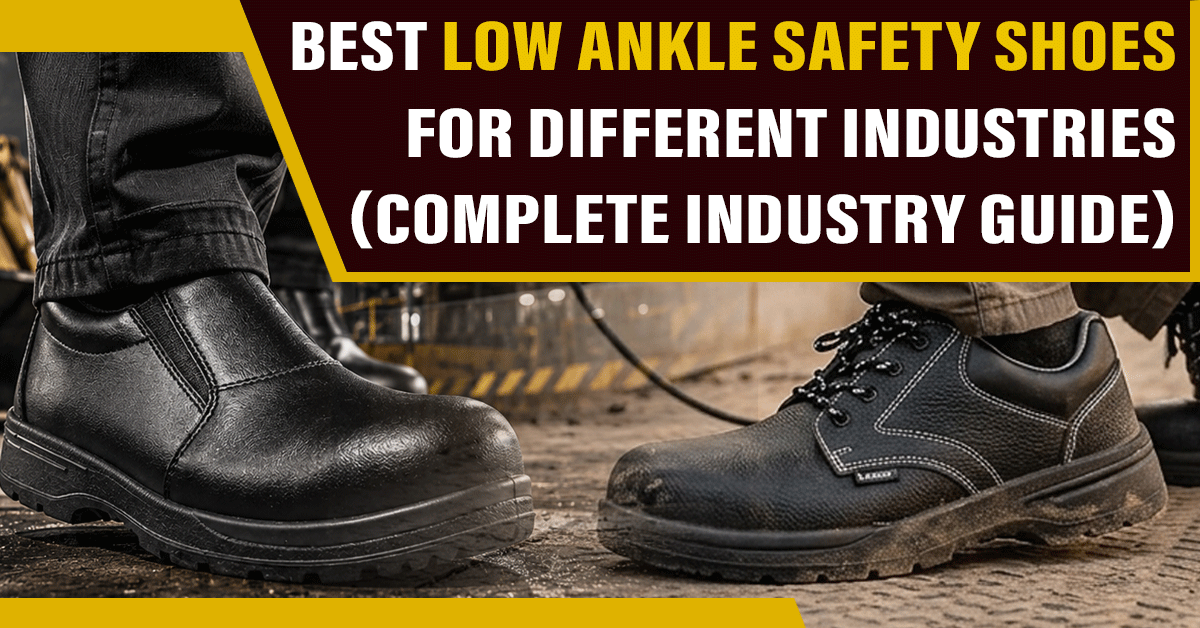
Choosing the right safety footwear is one of the most important workplace safety decisions. Different industries expose workers to different hazards, including falling objects, slippery surfaces, electrical risks, chemicals, sharp materials, and long hours of standing. Wearing the wrong type of safety shoes can increase the risk of injuries, reduce comfort, and affect productivity.
This is why low-ankle safety shoes have become a preferred choice across many industries. They provide dependable protection while remaining lighter, more flexible, and more comfortable than many high-cut alternatives. For workers who spend hours walking, climbing stairs, or moving between workstations, they offer an excellent balance between safety and mobility.
In this guide, you'll learn which low-ankle safety shoes work best for different industries, the difference between steel and composite toe protection, when high-ankle footwear is a better option, and how to maintain your shoes for a longer service life.
Why Industry-Specific Safety Shoes Matter
Not every workplace presents the same hazards. A warehouse worker faces different risks than an electrician or an oil and gas technician. Selecting footwear based on the actual work environment improves both safety and comfort.
Industry-specific footwear helps by:
-
Protecting workers from workplace hazards
-
Improving comfort during long shifts
-
Reducing fatigue
-
Increasing stability on different surfaces
-
Meeting workplace PPE requirements
-
Supporting productivity throughout the day
Before purchasing industrial safety shoes, consider the following:
|
Workplace Hazard |
Recommended Feature |
|
Falling tools or materials |
Steel or composite toe |
|
Wet or oily floors |
Slip-resistant outsole |
|
Electrical hazards |
Electrical hazard (EH) protection |
|
Chemical exposure |
Chemical-resistant upper and sole |
|
Outdoor work |
Water-resistant materials |
|
Long walking hours |
Lightweight cushioned design |
Choosing footwear according to workplace hazards ensures workers remain protected without sacrificing comfort.
Best Low Ankle Safety Shoes for Construction Workers
Construction sites contain multiple hazards every day. Workers encounter heavy materials, uneven terrain, nails, concrete, steel reinforcement bars, and slippery surfaces. Their footwear must provide reliable impact protection and excellent grip.
The best low-ankle safety shoes for construction should include the following:
-
Steel or composite toe protection
-
Puncture-resistant midsole
-
Slip-resistant outsole
-
Abrasion-resistant upper
-
Oil-resistant sole
-
Shock-absorbing heel
Many construction professionals prefer steel-toe low-ankle shoes because they provide excellent protection against heavy falling objects. Modern designs also include cushioned insoles that improve comfort during long working hours.
For supervisors, surveyors, and indoor construction workers, lightweight safety shoes offer better flexibility while maintaining essential protection.
Recommended Features
|
Feature |
Benefit |
|
Steel Toe |
Maximum impact protection |
|
Slip Resistance |
Prevents slips on wet surfaces |
|
Puncture Resistance |
Protects from nails and sharp debris |
|
Shock Absorption |
Reduces foot fatigue |
|
Breathable Lining |
Keeps feet cooler |
Best Low Ankle Safety Shoes for Warehouse & Logistics
Warehouse employees spend most of the day walking, lifting, loading, and moving products. Comfort is just as important as protection.
The ideal low-ankle safety shoes for warehouse work should be the following:
-
Lightweight
-
Breathable
-
Slip resistant
-
Flexible
-
Comfortable for extended wear
Many logistics companies now choose composite-toe safety shoes because they weigh less than steel alternatives while still providing certified toe protection.
Benefits include:
-
Reduced foot fatigue
-
Easier movement
-
Comfortable for long shifts
-
Better flexibility
-
Suitable for indoor work environments
Workers who cover several kilometers each day often prefer lightweight safety shoes with cushioned midsoles to improve comfort.
Best Low Ankle Safety Shoes for Manufacturing
Manufacturing facilities involve machinery, sharp materials, moving equipment, and repetitive walking. Foot protection is essential throughout every shift.
Recommended features include:
-
Slip-resistant outsole
-
Oil-resistant sole
-
Steel or composite toe
-
Anti-static properties were required
-
Comfortable cushioning
Manufacturing workers often move between production lines, storage areas, and assembly stations. A lightweight shoe reduces fatigue while maintaining protection.
Common industries include:
-
Automotive
-
Metal fabrication
-
Food processing
-
Textile manufacturing
-
Plastic production
-
Electronics assembly
For many indoor manufacturing environments, composite-toe safety shoes offer an ideal balance of protection and comfort.
Best Low Ankle Safety Shoes for Oil & Gas Industry
Oil and gas operations expose workers to demanding environments that include chemicals, slippery surfaces, heavy equipment, and changing weather conditions.
Safety footwear should include:
-
Oil-resistant outsole
-
Heat resistance
-
Slip resistance
-
Water resistance
-
Anti-static properties
-
Certified toe protection
Outdoor workers often require waterproof footwear, while indoor plant workers may benefit from low-ankle safety shoes that reduce fatigue during long inspections.
In high-risk operational zones, employers should always follow site-specific PPE requirements and applicable safety standards.
Best Low Ankle Safety Shoes for Electrical Work
Electrical workers need footwear that minimizes electrical hazards while remaining comfortable during installations and maintenance work.
The best footwear should offer:
-
Electrical hazard (EH) protection where required
-
Non-conductive materials
-
Slip-resistant outsole
-
Lightweight construction
-
Comfortable cushioning
Many electricians prefer composite-toe safety shoes because composite materials do not conduct electricity like metal components. However, footwear should always be selected according to workplace risk assessments and applicable electrical safety standards.
Electrical workers should also inspect shoes regularly for damage that may reduce protective performance.
Low Ankle vs High Ankle Safety Shoes
Both footwear styles provide workplace protection, but each suits different working conditions.
|
Feature |
Low Ankle Safety Shoes |
High Ankle Safety Shoes |
|
Weight |
Lighter |
Heavier |
|
Flexibility |
Excellent |
Moderate |
|
Walking Comfort |
Excellent |
Good |
|
Ankle Support |
Moderate |
Excellent |
|
Outdoor Terrain |
Moderate |
Excellent |
|
Hot Weather |
Better ventilation |
Less breathable |
|
Indoor Work |
Ideal |
Suitable |
|
Rough Construction Sites |
Suitable |
Better choice |
Choose low-ankle safety shoes if your work involves the following:
-
Long walking distances
-
Indoor environments
-
Warehouses
-
Manufacturing
-
Logistics
-
General industrial work
Choose high ankle boots if you frequently work on uneven terrain or require additional ankle support.
How to Maintain Low Ankle Safety Shoes
Proper maintenance improves both safety and product lifespan.
-
Clean After Every Shift
-
Dry Naturally
-
Inspect Regularly
-
Keep Them Dry
-
Replace Worn Insoles
Why Choose SAMS Low Ankle Safety Shoes?
SAMS supplies high-quality PPE designed for demanding industrial environments across the UAE. Its range of low-ankle safety shoes combines workplace protection with long-lasting comfort for professionals in construction, manufacturing, logistics, maintenance, and other industrial sectors.
SAMS footwear is designed with features such as the following:
-
Durable construction
-
Comfortable cushioning
-
Slip-resistant outsoles
-
Certified protective toe options
-
Lightweight designs for all-day wear
-
Reliable performance in industrial environments
Choosing the right footwear from a trusted PPE supplier helps employers improve workplace safety while supporting employee comfort and productivity.
Low Ankle Safety Shoes FAQs
Are low ankle safety shoes safe for construction work?
Yes. Certified Low Ankle Safety Shoes can be suitable for many construction roles when they include the required toe protection, puncture resistance, and slip-resistant outsoles. Always follow your employer's PPE requirements.
Are composite-toe safety shoes better than steel-toe shoes?
Neither is universally better. Composite-toe safety shoes are lighter and non-metallic, while steel-toe low-ankle shoes generally provide excellent durability and are often preferred for heavy-duty applications. The best choice depends on your work environment.
How long do industrial safety shoes last?
Most industrial safety shoes last between 6 and 18 months, depending on usage, workplace conditions, and maintenance. Replace them immediately if their protective features become damaged.
Are lightweight safety shoes durable?
Yes. Modern lightweight safety shoes use advanced materials that provide durability while reducing overall weight. Always choose footwear certified for your specific workplace hazards.
Can low ankle safety shoes be worn every day?
Yes. High-quality low-ankle safety shoes are designed for daily industrial use and provide comfort for extended working hours when properly fitted and maintained.
Conclusion
The right low-ankle safety shoes do more than protect your feet—they improve comfort, reduce fatigue, and help workers perform confidently throughout the day. Whether you work in construction, manufacturing, logistics, oil and gas, or electrical maintenance, selecting footwear that matches your workplace hazards is essential for long-term safety.
When choosing safety footwear, look beyond appearance. Consider certification, slip resistance, toe protection, sole quality, comfort, and durability. Investing in reliable PPE helps reduce workplace injuries and supports compliance with occupational safety requirements.
SAMS offers dependable safety footwear designed for demanding industrial environments. From lightweight safety shoes for warehouse professionals to durable steel-toe low-ankle shoes for construction sites and composite-toe safety shoes for specialized industries, SAMS provides practical solutions that combine protection, comfort, and lasting performance.