
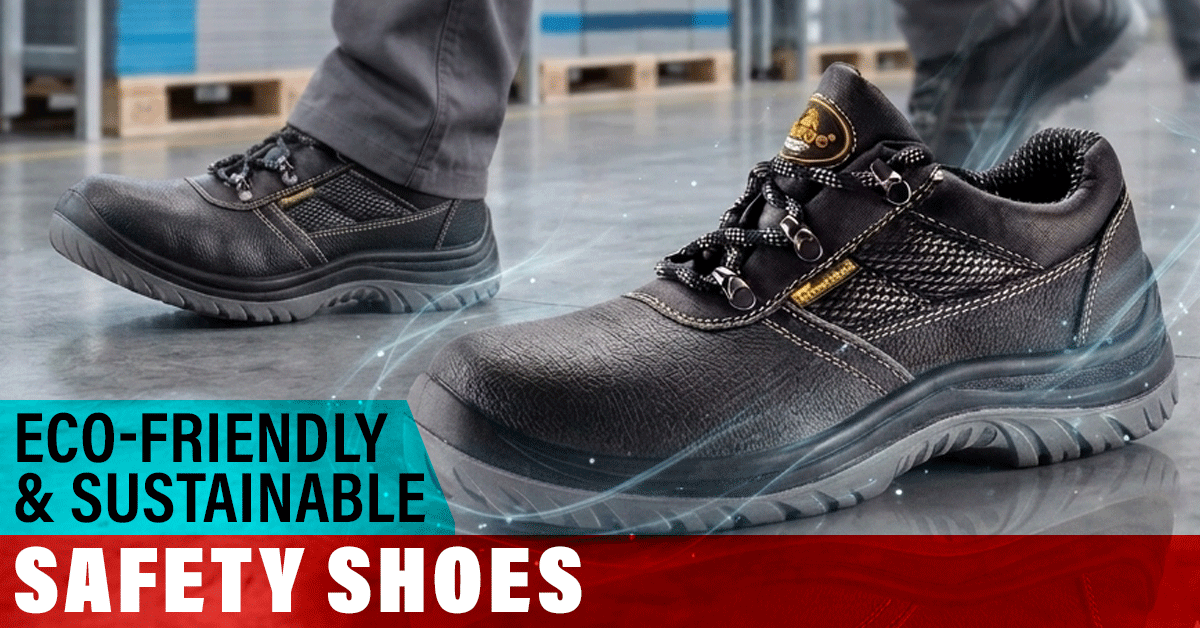
For an exceptionally long time, factory and construction boots dedicated on just one goal. They had to keep workers from gray drops, sharp nails, and hard floors. Because of this, factories used intense leather, tough virgin plastics, and thick synthetic rubber. These stuff are great for safety, but they found a huge amount of contamination during manufacturing. Fortunately, times are changing instantly. Today, business holders and industrial workers want a superior choice. They frequently ask if it is feasible to shield our feet and rescue the environment at the same time. The answer is yes. Recognizing modern science and new green technologies, environmental safety shoes are now broadly available. They perform just as well as old-fashioned options. In these instructions, we will explain how these eco-friendly shoes work, what information they use, and how to locate the perfect pair for your job.
Why Traditional Safety Boots Hurt the Environment
To recognize why we need green footwear, we want to look at how standard work boots are made. The conventional manufacturing process uses an enormous number of natural resources.
First, standard leather needs a chemical tanning procedure. This activity often uses heavy metals like chromium. If a factory exports these chemicals poorly, the poisonous waste can be released into local rivers and harm wildlife. Second, the soft foam within the shoe comes from petroleum, which is a vestige fuel. These tough foams are devised to last for a very long time. Sadly, this suggests they do not end down when you drop them away. Instead, they sit in landfills for hundreds of years.
Millions of industrial workers put away their worn-out boots each single year. Because of this everyday replacement, the pile of industrial waste grows larger every day. This constant cycle of discarded is the main justification why we must switch to eco-friendly footwear.
What Makes a Safety Shoe Sustainable?
True sustainability is not just a promoting trick. A shoe is only truly green if the firm uses eco-friendly materials from start to finish. Let us look directly at the discrete parts of a modern sustainable work boot.
1. Uppers Made from Recycled Plastic
As an alternative to using brand-new polyester, green brands use reused plastic bottles. Workers assemble these old bottles, wash them, and destroy them into tiny plastic flakes. Then, machines soften these flakes and spin them into strong, elastic threads. This fabric is amazingly tough, so it challenges tears and scratches perfectly on the job.
2. Plant-Based Foam Midsoles
The midsole is a thick cushion coating inside the shoe. It attracts shock and protects your joints when you walk on hard solids all day. Instead of using accepted crude oil, green corporations make this foam from sugarcane or algae. Some sorts even grind up old tires and mix them into the elastic soles to decrease factory waste.
3. Recycled Steel or Composite Toes
Every safety shoe requires a hard protective cap throughout the toes. Making brand-new steel wants a great amount of energy and heat. To fix this, green brands use reused steel alloys. Many corporations also swap out steel for composite stuff like fiberglass or carbon fiber. These composite toes are much brighter than steel, which keeps your feet from stepping tired during long shifts.
In factory jobs in the UAE, the supervisor verifies safety compliance throughout many large warehouses and manufacturing hubs. At first, it did not trust eco-friendly protection gear. A few years ago, the early models of green boots had significant flaws. The soles peeled off too fast and the inner linings tore when they got wet.
However, footwear machinery has recovered dramatically since then. Last year, they handled a six-month test at a heavy machinery factory. It yielded forty workers new safety boots through recycled plastics and plant-based foam.
The outcome surprised all. None of the environmental boots broke or tore during the test. Even better, the workforce said the plant-based foam kept its structure longer than established foam. Regular foam usually levels out after a few months, but these green shoes continue to be comfortable. This test demonstrated to me that eco-friendly shoes are prompt for hard work.
Clearing Up Common Myths About Green Work Shoes
Many consumers still hesitate to transform their footwear because they trust inaccurate rumors. Let us gaze at the facts and improve these common misunderstandings.
Myth 1: Eco-Friendly Shoes Are Not Safe
This speculation is entirely false. Every safety shoe must approve the exact same official tests beforehand a company can sell it. The regulations do not care if a boot is made of fresh skin or recycled ocean plastic. Every shoe must earn firm official safety ratings, such as:
-
ASTM F2413-18 (The standard valuing in the United States)
-
EN ISO 20345:2022 (The standard score in Europe)
Examining labs drop heavy weights on these shoes to evaluate impact. They also press them with solid force and test them on slippery floors to prevent slips. Therefore, a green boot shields your toes just as well as an old-fashioned boot.
Myth 2: Green Boots Cost Too Much Money
Environmental materials cost a bit more to foundation, so these shoes can cost 5% to 10% more frankly. However, you will typically save money in the long run. High-quality eco-friendly fabrics are very durable, so they do not wear out faster. Because the shoes last longer, you do not have to buy alternatives as often.
How to Choose Your Next Pair of Green Safety Shoes
Discovering the right environmental shoe is simple if you hunt a few basic rules. Use this quick guide to make an intelligent choice.
Look for Independent Certification Labels
Do not just have confidence in what a brand says on the box. Look for authorized stamps from individual testing groups to verify their green claims:
-
Global Recycled Standard (GRS): This label establishes the accurate amount of recycled plastic within the shoe fabric.
-
Leather Working Group (LWG): This stamp surfaces that the leather factory protects water and prevents toxic chemicals.
-
OEKO-TEX Standard 100: This document guarantees that the shoe includes no unsafe toxins or chemicals.
Match the Shoe to Your Specific Job
Always select a shoe that fits the regular hazards of your authentic workplace.
|
Your Work Environment |
What Your Feet Need |
Best Sustainable Solution |
|
Warehouses & Shipping |
Cool Air & Low Weight |
Shoes with recycled plastic mesh uppers and light composite toes. |
|
Construction Sites |
Dry Feet & Heavy Protection |
Boots made from LWG-certified waterproof leather. |
|
Chemical Plants |
Chemical & Slip Resistance |
Shoes with recycled rubber outsoles and bio-based puncture plates. |
A Cleaner Future for Industrial Footwear
In the impending future, the safety shoe industry plans to create a fully circular system. This means that a worn-out boot will not ever go into a trash can. As an alternative, the object will allow workers to transport the shoe apart simply.
Numerous top footwear brands are creating new recycling programs right now. When your boots completely wear out, you can send them back to the company. The company gets out the metal parts, shreds the old clothes, and uses the scraps to construct brand-new trade products. By shutting this loop, we can keep our workers and retain our planet wash at the exact same time.
At SAMS Solutions, we are committed to helping businesses choose safety footwear that delivers comfort, durability, and certified protection while supporting a greener future for the next generation of workers.
Safety Shoes FAQ’s
1. Do the green safety shoes safeguard you to the same standard as a conventional pair of boots?
Yes. It doesn‘t matter whether the safety shoe is manufactured from virgin leather or a thousand recycled plastic bottles, both are subject to exactly the same stringent regulatory requirements in order to be able to be bought and sold. So whether it‘s a virgin leather or a recycled plastic bottle it will have to conform to a strict three way safety certification such as ASTM F2413-18 or EN ISO 20345:2022. Testing facilities will carry out identical impact, compression and slip tests.
2. What materials are manufacturers employing to develop eco-friendly safety shoes?
The first step is replacing the traditional new petroleum-based plastics and leather by more sustainable materials. Therefore, rPET, that is the recycled plastic bottles, and bio-based foams made from sugarcane and algae are applied as fabrics, linings and padding, whereas rubber and tires are reprocessed for sole materials. Besides, light weight composites or recycled steels are used for toe caps.
3. Do sustainable safety boots cost more?
They may cost around 5%-10% more initially as sourcing good quality recycled and plant-based raw materials is a niche skill. But, because these engineered materials are so robust, the boots tend to last longer than cheap synthetics so you buy fewer pairs.
4. Will I be able to recycle my green boots when they wear out?
Industry is heading toward a totally circular economy and many of the big brands are providing buy back recycling initiatives. As these new shoes are being made in a way that allows dismantling, the maker has the possibility to remove the toe caps, cut the unusable fabrics apart and recycle the residual into a new stock of industrial raw materials that will not go to a landfill.
5. How do I verify that a safety shoe is truly eco?
The best way to do this is to find out if the safety shoe has been independently certified by a third-party certification, and what label was used for the certification. Check to see whether the box or the description of the product has a label such as the GRS ( Global Recycled Standard for recycled fabrics ) the Leather Working Group or LWG ( to monitor the clean tanning of leather ), or OEKO-TEX Standard 100 ( to ensure the shoe is pesticide and chemically free).