
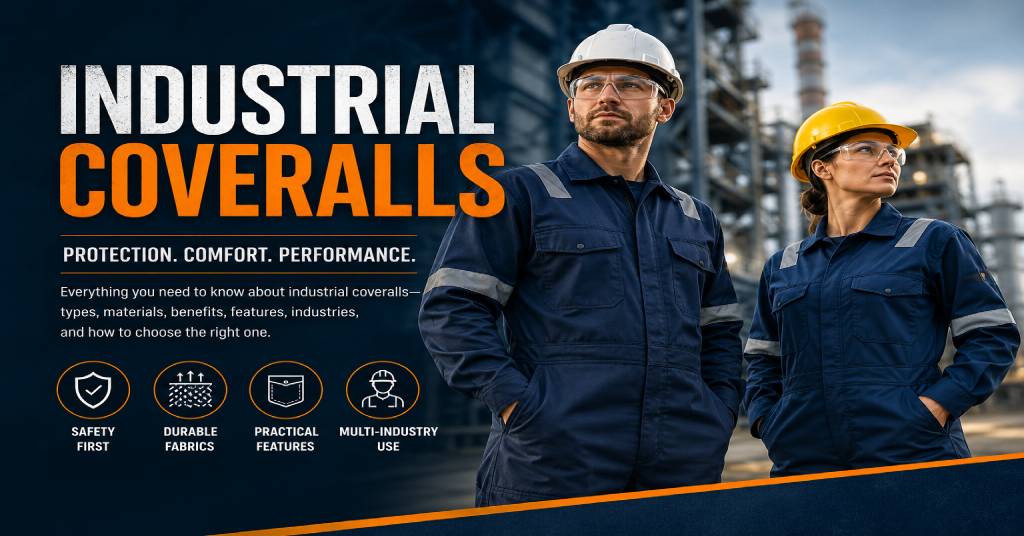
Just think about being on an active construction site in the early hours of the morning. There will be large pieces of equipment, welding sparks flying around, and people will be using chemical materials and machinery. In such conditions, safety is not just suggested; it is necessary. Industrial coveralls have become an essential part of safety equipment in situations like this.
Each day, thousands of workers come into contact with dangers that may lead to them suffering from burns, exposure to harmful chemicals, cuts, and many other injuries. However, the use of appropriate protective workwear becomes a barrier between these dangers and the worker. Protective work clothing is not just about covering the body but also makes workers more comfortable.
A technician in an oil plant, a mechanic tending to heavy machinery or an operator overseeing manufacturing processes with proper coveralls will definitely aid them. Therefore, the selection of the proper safety garments for the industry isn't only a matter of adhering to safety provisions; it's about saving lives.
READ MORE: Coverall Suppliers in UAE
Importance of Industrial Coveralls in Workplace Safety

The workplace may undergo drastic changes in no time at all. Some of the simplest things that can make a difference in reversing the situation are a chemical spill, a sudden burst of fire or simply a slip. That's why it's important that all kinds of businesses have a good pair of coveralls for their employees so that they will work in a safe environment.
Protection from Hazards
Let's think about a worker who is dealing with chemicals used in industries without proper protection. A small amount of a chemical that may accidentally come into contact with his skin can burn and cause very significant skin damage. Similarly, a welder is exposed to sparks and faces the heat constantly throughout the workday.
So that's why the industrial coveralls are designed to protect them from hazards like the following:
-
Oil and grease
-
Dust and airborne particles
-
Chemical splashes
-
Fire and heat exposure
-
Abrasion and minor cuts
For instance, in chemical processing plants, workers put on chemical coveralls, which actually serve as a barrier between them and harmful stuff. Similarly, individuals in the manufacturing atmosphere that generates dust use coveralls to prevent their skin and garments from being contaminated.
Compliance with Safety Regulations
The main purpose of safety regulations is to minimize the risk of danger in the workplace and save lives. In the workplace where the hazards are, OSHA will help ensure adequate protective equipment. Also, they strictly adhere to the safety requirements in all kinds of industries in the UAE and other foreign markets. Buying protective clothing for workers is always a good investment for your business.
Reducing Workplace Injuries
There is always a price to pay for any sort of injury. It can affect production capacity, the schedule of projects, the reputation of organizations, and most importantly, the health of employees.
But those companies that emphasize personal protective equipment do not face too many accidents at the workplace. When the correct safety coveralls are used, the chance of getting burnt, affected by chemicals, and contaminated becomes lower. It helps employees concentrate more on what they have to do.
Improving Visibility and Safety
Consider a road crew doing their work at night. Traffic on the road runs fast and is only a few feet away from where the road crew works. In such a case, visibility means life or death.
The high-visibility coveralls are made in such a way that they have bright colors and reflective tapes that remain visible in low light. It allows operators to use the equipment and drive cars to see the road crew quickly, thus avoiding accidents.
Benefits of Using Industrial Coveralls
Here are some benefits of using industrial coveralls in workplaces for safety.
-
Improves Worker Safety
-
Increases Workplace Efficiency
-
Compliance with Regulations
-
Improved visibility
-
Protection against the weather
-
Clothing protection
-
Minimizes Future Costs
-
Improves Worker Comfort
-
Establishes a Good Safety Culture
Types of Industrial Coveralls
Every workplace has its own set of challenges. Manufacturers produce coveralls for specific challenges depending on the type of environment.
Understanding the various choices that are available will help companies to choose what works best. So here are some types of industrial coveralls:
Cotton Industrial Coveralls
At the workplace, safety and comfort play an important role. Workers who feel more comfortable are likely to wear protective coveralls throughout their shift. Coveralls that are made of cotton material can be used by workers because they are breathable, lightweight, easy maintenance and a good fit throughout the day.
Fire-Retardant Coveralls
There are many workplaces where individuals are constantly subjected to sparks, heat, and flames. For such individuals, regular clothes cannot be sufficient.
FR coveralls are made to ensure that there will be fewer chances of ignition, and even if a fire takes place, the damage caused to the wearer is minimal. They can literally save workers' lives in these sectors.
Here are some typical industries where they are used:
-
Oil and gas
-
Welding
-
Electrical
-
Petroleum chemicals
-
Energy generation
Chemical Protection Coveralls
One of the major work-related dangers is exposure to chemicals. Even minimal contact with chemicals may result in injury and other serious health problems.
Therefore, chemical coveralls are made from a specific material that is impermeable to chemicals.
Some of the common places where you can see chemical protection coveralls include the following:
-
Labs
-
Drug manufacturing companies
-
Chemical factories
-
Hazardous waste facilities
The advantage of wearing such coveralls gives employees more confidence in performing their job.
Disposable Coveralls
Reusable uniforms are not always necessary within an environment. In some cases, it is contamination rather than safety that becomes the main issue. Disposable coveralls are an excellent choice for an environment in which cleanliness and hygiene play an important role. They have several advantages, including:
-
Convenience of use
-
Lower contamination risk
-
Lightness in weight
-
Easy disposal
These types of uniforms are commonly used in healthcare institutions, food industries, and cleaning companies.
READ MORE: Disposable Coverall Suppliers in UAE: Buyer’s Guide
High-Visibility Coveralls
There are some occupations that require constant visibility of the person doing that job. These high-visibility coveralls combine protective fabrics with reflective elements for better recognition of the wearer in hazardous environments.
Their applications include:
-
Road construction
-
Airports
-
Railway work
-
Mining
-
Night shifts
Therefore, these coveralls help avoid incidents with machines, vehicles, and other equipment.
Key Features of High-Quality Industrial Coveralls
As you know, all coveralls that are provided are not on the same level of performance. So here are some features that help buyers make informed decisions.
-
Workplace conditions put significant stress on clothing. Thus, using strong stitches increases the durability of the clothes.
-
It allows for better comfort and reduces the risk of dust and other harmful substances penetrating clothing.
-
Employees have to use many tools and other items daily at work. Hence, having enough pockets on the clothes makes work easier.
-
High heat levels remain a significant problem in various industries. Therefore, breathable materials are crucial for employee comfort.
-
Employees may face extreme risks at the workplace. Hence, the right kind of coverall with the required resistance ratings is important.
-
The wrong fit makes the clothes less comfortable and potentially increases workplace injuries.
How to Choose the Right Industrial Coveralls
The process of choosing appropriate coveralls depends on the environment you are working in.
Think about Your Industry
Certain industries have unique safety requirements.
|
Industry |
Recommended Coveralls |
Primary Protection |
|
Construction |
High-Visibility Coveralls |
Visibility around vehicles and equipment |
|
Manufacturing |
Cotton Coveralls |
Comfort and basic workplace protection |
|
Oil & Gas |
Flame and heat resistance |
|
|
Chemical Processing |
Chemical Coveralls |
Protection against hazardous substances |
|
Healthcare |
Disposable Coveralls |
Contamination control and hygiene |
Industrial Coveralls Standards & Certifications
Effective protective clothes should have valid safety certifications. The following are some global standards that you should consider before buying your protective wear:
|
Standard / Certification |
Protection Type |
Target Industry |
|
OSHA Compliance |
General US Workplace Safety |
Construction & Manufacturing |
|
EN ISO 11612 |
Flame and Heat Resistance |
Oil, Gas, & Welding |
|
EN ISO 20471 |
High-Visibility Performance |
Roadwork & Logistics |
|
CE Mark |
European Safety Conformity |
Global Export & Chemicals |
Safety Recommendation
Picking the right coveralls is just the start. Workers also need to know how to use and take care of them properly to really stay protected.
-
Always do a quick inspection before each shift. Small issues can seriously cut down the garment’s protective power.
-
Choose your coveralls based on what hazards you'll face at work. If someone's working around heat, they should go for those fire-retardant coveralls. And for dealing with chemicals, choose something that's resistant to them.
-
Make sure the coveralls fit well. They shouldn't be so tight that they snag on things or so loose that they cause trips.
-
Stick to the manufacturer’s instructions for cleaning and maintaining the gear. This keeps the protective abilities in top shape.
-
Don't forget to replace coveralls once they've seen better days. Get rid of them if they’re worn out, contaminated, or just plain damaged.
And lastly, give workers the proper safety training. Teach them the
Final Thoughts
The first thing that is always the same at the beginning of each shift is that someone is entering an environment where there are risks. There are those who will be exposed to very hot conditions, while others will have to work with chemicals, machinery, and even vehicles. Though the challenges are varied, they all call for the same action.
That is why it is critical to choose the right industrial safety clothing when it comes to worker safety. Quality coveralls ensure that the workers are safeguarded, productive and comfortable while working.
The type of protection required by each company will differ according to each one, depending on the risk factors within the work environment, whether it is the regular coveralls or the specific fire-retardant coveralls. At SAMS Solutions, make sure that you are investing in good-quality and certified coveralls that will be able to cater to your needs.
Industrial Coveralls FAQs
How often should industrial coveralls be replaced?
Replace your coveralls when they get damaged, super worn-out, or dirty because they don't protect you anymore. Doing regular checks makes it easy to know when you need the new ones.
Can industrial coveralls be washed and reused?
A lot of industrial coveralls can be washed and reused by following the manufacturer's advice. On the other hand, disposables are meant for single use only, not more than once.
What certifications should I look for when buying industrial coveralls?
Check for the right certifications, like ISO or EN ISO protective clothing standards and CE marking. This means they've passed tests showing they work as intended for protection.
Are chemical coveralls reusable?
For chemical coveralls, you have choices between those reuse and single-use types. Figure out which go with based on how risky your situation is and what the manufacturer says.
What is the difference between regular coveralls and industrial coveralls?
Regular coveralls are basically just for covering up, whereas industrial ones are made to keep you safe at the workplace. They usually have extra-strength stitching and special safety fabrics so that they meet industry safety standards.