
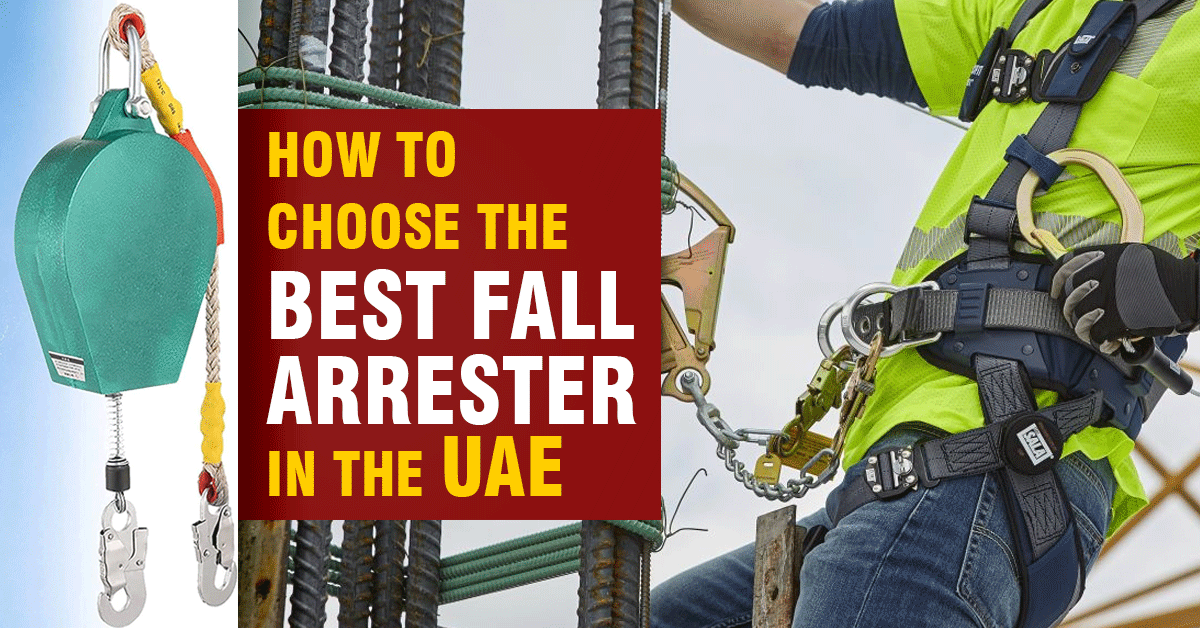
Being at heights is perhaps one of the most dangerous activities in different fields. The risks of falling apply to construction workers, maintenance workers, warehousing employees, and telecommunication technicians, as well as people working in the oil and gas industry. Proper safety equipment plays a crucial role in avoiding accidents even when well-trained.
A fall arrester is one of the critical elements of personal fall protection equipment. Its primary function is to bring to a swift stop any falling worker, thereby minimizing the resultant impact forces to help avoid serious injuries or death. Not all types of fall arrestors are recommended for use under every kind of working condition. Several considerations need to be considered when selecting the right fall arrester.
In the UAE, employers should be able to offer fall protection equipment that can be relied upon in the UAE workplace to ensure that the workplace is safe for their workers and adheres to workplace safety standards. Buying height safety equipment ensures the safety of your workers and improves production.
Here is an informative guide for choosing the right fall arrester. You will learn about the various types of fall arresters, their key characteristics, uses within industries, maintenance information, and common mistakes made while purchasing a fall arrester. This comprehensive guide will assist you whether you are in need of an industrial fall arrester trusted by many UAE organizations or a fall arrest system used by most UAE organizations. At SAMS, we have fall protection solutions that can be of great use to businesses in the UAE.
What Is a Fall Arrester?
The fall arrester is a safety mechanism whose function involves the automatic locking of a lifeline or cable in case of a sudden fall. The primary objective of a fall arrester is to bring the fall to an end as soon as possible.
It should be noted that a fall arrester is different from positioning and restraining devices in that it is meant for the protection of workers in case of a fall.
How a Fall Arrester Works
The fall arrester slides on the line, cable, or retractable lifeline as the worker works on his/her job. If the worker falls or slips, then the arrester catches hold of the line and arrests the fall almost instantly.
In many modern-day fall arresters, shock-absorbing properties have also been incorporated into the design. This helps in reducing the amount of force that may be imparted to the body of the falling person.
Industries That Require Fall Arresters
Fall arresters are widely used in industries where employees regularly work above ground level, including:
-
Construction
-
Oil and gas
-
Manufacturing
-
Warehousing
-
Telecommunications
-
Building maintenance
-
Utilities
-
Wind energy
-
Infrastructure projects
These industries rely on certified height safety equipment that UAE employers can trust to improve workplace safety and protect their workforce.
Why Choosing the Right Fall Arrester Is Important
Selecting the right fall arrester is about more than meeting safety requirements. It directly affects worker protection, operational efficiency, and long-term business performance. Using equipment that matches the job helps reduce risks and creates a safer working environment.
-
Reduces the Risk of Serious Injuries
-
Improves Workplace Safety
-
Supports Safety Compliance
-
Increases Worker Confidence
-
Reduces Downtime and Business Costs
-
Provides Long-Term Value
Types of Fall Arresters
Every fall arrester cannot be used to provide safety under the same conditions. This means that there are certain factors that must be considered in the selection process, including the type of work, the height of work, and the range of movement needed.
Rope Grab Fall Arresters
Rope grabs fall arresters travel along a vertical or inclined rope when the person is climbing or working. In the event of a fall, the rope grab instantly secures to the rope to prevent further falls.
They are lightweight, easy to operate and are commonly seen on construction sites, scaffolding, ladders and maintenance operations. They make great options for people who work by moving vertically between different levels.
Cable Fall Arresters
In the case of the cable fall arrester, the mechanism works using a steel cable rather than a rope. The device is suited to extreme conditions where high durability and wear resistance are needed.
The cable fall arrester is commonly found in the oil and gas sector, heavy industries, and telecommunication industries. The sturdiness of the device suits its outdoor application.
Retractable Fall Arresters
A retractable fall arrestor, or a self-retracting lifeline (SRL), automatically extends and retracts depending on the movement of the user. In case of an abrupt fall, the arresting system starts working immediately and arrests the fall over a short distance.
Since they limit the free fall distance, they are best used in construction sites, warehouses, loading areas, rooftops, and maintenance operations. They also offer more mobility hence are among the most popular in the modern workplace.
Guided Type Fall Arresters
Guide-type fall arresters follow a permanent rail or rigid lifeline system. This type of system is designed to operate seamlessly with the worker while locking instantly upon a fall.
It is common practice for such equipment to be installed at fixed ladder installations, communication towers, wind turbine sites, industrial sites, and tank farms.
Which Type Is Best?
There is no single fall arrester that suits every application. The best choice depends on several factors, including:
-
Working height
-
Type of lifeline or anchor system
-
Worker mobility requirements
-
Environmental conditions
-
Frequency of use
-
Industry-specific hazards
Key Features to Look for When Buying a Fall Arrester
The selection of a good fall arrester is not only about picking the right type. You need to consider its safety, longevity, and whether or not it is compatible with the rest of your equipment. The best fall arrester gives you reliable safety and is durable.
-
Certification and Safety Standards
-
Fast and Reliable Locking Mechanism
-
Shock Absorption
-
Durable Construction
-
Weight Capacity
-
Compatibility with Other Equipment
-
Ease of Inspection and Maintenance
-
Worker Comfort and Mobility
Choosing the Right Fall Arrester for Different Industries
Every industry has unique workplace hazards and safety requirements. A fall arrester that works well on a construction site may not be suitable for a telecom tower or an oil and gas facility. Selecting equipment that matches the work environment helps improve safety, efficiency, and compliance.
|
Industry |
Recommended Fall Arrester |
Why It Is Suitable |
|
Construction |
Retractable Fall Arrester |
Provides excellent mobility while reducing free-fall distance on active job sites. |
|
Oil and Gas |
Cable Fall Arrester |
Built for harsh environments and offers reliable performance in demanding conditions. |
|
Telecommunications |
Guided Type or Rope Grab Fall Arrester |
Supports safe climbing on towers and fixed ladders while allowing controlled movement. |
|
Warehousing and Logistics |
Retractable Fall Arrester |
Ideal for loading bays, elevated platforms, and maintenance areas where workers move frequently. |
|
Building Maintenance |
Rope Grab Fall Arrester |
Lightweight and easy to use for façade cleaning, inspections, and repair work. |
|
Manufacturing Plants |
Cable or Guided Type Fall Arrester |
Provides dependable protection around elevated machinery, platforms, and production lines. |
|
Utilities and Infrastructure |
Guided Type Fall Arrester |
Suitable for workers accessing poles, bridges, and other fixed structures. |
Consider Your Workplace Risks
Before purchasing a fall arrester, assess the specific risks at your workplace. Important factors include:
-
Working height
-
Type of structure
-
Frequency of use
-
Indoor or outdoor environment
-
Weather conditions
-
Worker mobility requirements
-
Existing fall protection system
A proper risk assessment helps ensure that the selected equipment provides the highest level of protection.
Consult a Trusted Supplier
Selecting an appropriate industrial fall arrester to suit requirements in UAE workplaces is difficult, particularly for complicated projects. It’s important to get professional advice when working with a competent supplier.
The fall protection equipment provided by SAMS covers various types of equipment for use in construction, industrial, maintenance, telecom, and infrastructural projects in UAE workplaces. They will assist you in getting the most appropriate one to suit your work at height applications.
Understanding a Complete Fall Arrest System
A fall arrester provides effective protection only when used in conjunction with a complete fall protection system. Each part has an individual function in slowing a fall in a safe way and in lowering the risk of injury. If one part is incompatible or fails, the whole system may not function as expected.
Understanding how these components work together helps businesses build a reliable fall arrest system that UAE workplaces can depend on.
Full Body Harness
The worker wears a full-body harness. It spreads the impact of a fall over the shoulders, chest, pelvis and thighs, decreasing the chances of serious injury.
A properly fitting harness is essential for comfort, mobility, and effective fall protection.
Fall Arrester
The fall arrester is the device that moves on a lifeline or cable in normal movement. Should the worker fall, it locks automatically and arrests the fall in a short distance.
This rapid reaction helps to reduce impact forces and provides vital protection when working at height.
Lifeline
The lifeline is connected to the worker and to the anchor point and provides the means by which the fall arrester will travel. Lifelines can be made from durable rope, steel cable or rigid rail systems depending on the application.
The type of lifeline must always be compatible with the fall arrester used and the working environment.
Anchorage Point
The anchorage point is the safe structure to which the whole fall protection system is attached. It must be strong enough to resist the forces generated during a fall and should always be installed according to the recommendations of the manufacturer.
If the anchor is bad or weak, it can endanger the safety of the whole system.
Connectors and Lanyards
Connectors such as carabiners and hooks are used to connect the harness, fall arrester and anchorage securely. Some systems even include shock absorbing lanyards to reduce the force of impact when falling.
The use of certified connectors compatible with the rest of the equipment also ensures reliability.
Why Compatibility Matters
A fall protection system should never be assembled using random components from different products without checking compatibility. Every part must work together to provide effective protection.
Before use, make sure:
-
The fall arrester is compatible with the lifeline.
-
The harness fits the worker correctly.
-
The anchorage point meets the required strength.
-
Connectors are properly locked and securely attached.
-
All equipment is certified and inspected before use.
Selecting compatible fall protection equipment that UAE employers can trust improves workplace safety and helps reduce the likelihood of equipment failure.
Common Mistakes to Avoid When Buying a Fall Arrester
Fall arrester purchase is a crucial safety issue. Yet, too many companies are concerned about price or availability without taking into account the appropriateness of the product for the conditions of their workplace. The following are some typical errors that should be avoided to ensure greater safety and durability of your fall protection equipment.
-
Choosing Price Over Quality
-
Ignoring Safety Certifications
-
Selecting the Wrong Type of Fall Arrester
-
Overlooking Weight Capacity
-
Using Incompatible Equipment
-
Skipping Regular Inspections
-
Buying from Unverified Suppliers
-
Failing to Train Workers
Why Buy Your Fall Arrester from SAMS?
Choosing the right supplier is just as important as choosing the right fall arrester. A trusted supplier provides certified products, expert advice, and reliable support to help businesses maintain safe working environments. Whether you operate in construction, manufacturing, oil and gas, or maintenance, purchasing quality equipment from a reputable company ensures long-term safety and performance.
-
Certified Safety Equipment
-
Wide Range of Fall Protection Solutions
-
Expert Product Guidance
-
High-Quality Products for Demanding Environments
-
Reliable Service Across the UAE
-
A Trusted Partner for Workplace Safety
Final Thoughts
Selection of an appropriate fall arrest device is crucial in terms of the safety of employees working at heights. The right solution may vary according to the place of employment, nature of the job, and amount of mobility that will be required by the employee. Proper investments in certified fall arrest equipment along with proper inspections will ensure safety from such accidents.
The fall protection system should consist of much more than the fall arrester alone. In addition, the system should comprise the correctly fitting harness, an adequate anchorage point, a proper lifeline, and employees adequately trained on the use of the apparatus. Maintenance and inspection are vital parts of the system as well.
If you want to find quality fall protection systems trusted by UAE businesses, then you will be able to find a variety of such systems offered by SAMS. Choosing safe equipment now will help you to ensure the safety of your workplace in the future.
Fall Arrester FAQ's
1. What is a fall arrester used for?
The function of a fall arrester is to immediately halt the fall of a worker and minimize the impact force applied to him. This equipment is an integral component of a personal fall protection system.
2. Which industries use fall arresters?
Fall arresters find common use in construction, oil & gas, manufacturing, warehousing, telecommunications, utility work, building maintenance, and infrastructure work.
3. How do I choose the right fall arrester?
Think about the working height, the kind of structure involved, the mobility of the user, the environment, the weight, and whether it will work with the existing fall protection program. It is always important to use certified equipment.
4. How often should a fall arrester be inspected?
The fall arrester must be checked visually before each usage and must be subject to regular inspections conducted by a competent person as recommended by the manufacturer. The equipment must be taken out of service if it has been subjected to a fall or is damaged.
5. Where can I buy a certified fall arrester in the UAE?
You can purchase a fall arrester in the UAE from trusted PPE suppliers such as SAMS, which provides certified fall protection equipment for a wide range of industrial and commercial applications.