
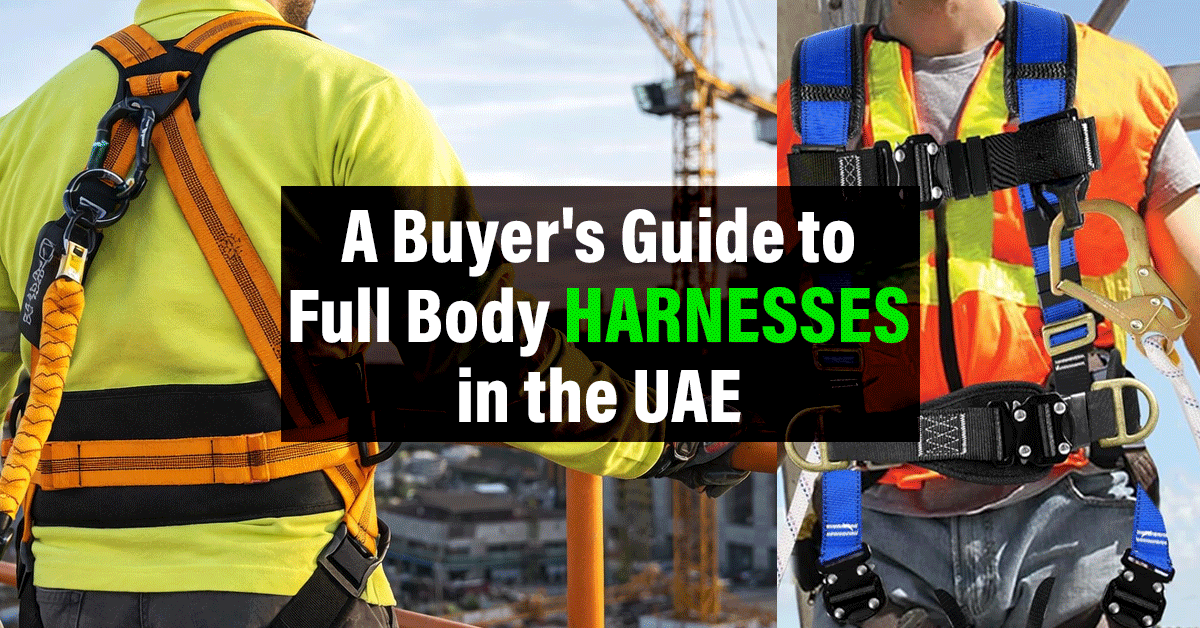
The UAE's construction and industrial sectors involve extensive work at height, making reliable fall protection essential. Choosing the right full body harness helps employers provide workers with appropriate protection when working on towers, rooftops, platforms, and other elevated areas.
Buying a safety harness involves more than choosing the cheapest option. Employers and safety managers should consider the work activity, applicable safety requirements, harness design, correct fit, environmental conditions, and compatibility with other fall protection equipment.
This guide explains how to choose a full body harness in the UAE, including key safety features, work-at-height considerations, climate factors, and proper inspection practices.
How a Full Body Harness Protects Workers
A full body harness is one component of a complete fall protection system. It is designed to distribute forces across appropriate areas of the body when used as part of a suitable fall protection system.
A typical system may include:
-
Full Body Harness: Wearable equipment designed to connect the worker to a compatible fall protection system.
-
Connecting Device: Equipment such as a lanyard or other suitable connection device used to connect the harness to an anchorage system.
-
Anchor Point or Anchorage System: A suitable attachment point or system designed for the intended fall protection application.
-
Energy Absorber: Where required, an energy-absorbing component can help reduce forces generated during a fall.
-
Rescue Plan: A planned procedure for recovering a worker after a fall or other work-at-height emergency.
The harness should not be considered a complete fall protection system by itself. All components need to be suitable for the work activity and compatible with each other.
A waist belt alone should not be used as a fall-arrest harness. Full body harnesses are designed for personal fall protection applications where the applicable system and equipment requirements are met.
Full Body Harness Standards and Compliance
When selecting a full body safety harness, always check the applicable product standard, certification information, and manufacturer's documentation.
EN 361 Full Body Harness Standard
EN 361 is the European standard covering personal protective equipment against falls from a height and requirements for full-body harnesses.
A harness certified to an applicable standard should have clear product markings and supporting documentation. Buyers should verify the actual certification of the specific harness rather than relying only on general claims made by a supplier.
ANSI/ASSP Z359 Standards
ANSI/ASSP Z359 is a family of standards covering different aspects of fall protection equipment and systems in the United States.
The specific standard applicable to a product depends on the equipment and intended application. Therefore, buyers should check the manufacturer's certification and technical documentation for the exact harness model.
UAE Workplace Requirements
Work-at-height activities in the UAE may be subject to applicable federal and local workplace safety requirements. Employers should identify the requirements that apply to their industry, worksite, location, and activity.
Safety managers should also follow site-specific risk assessments, safe work procedures, equipment inspection requirements, and manufacturer instructions.
For projects in Dubai, Abu Dhabi, and other Emirates, additional requirements may apply depending on the authority, project, industry, or worksite.
Key Features to Consider When Choosing a Full Body Harness
Different work activities require different harness designs. Before buying a safety harness in the UAE, consider the following features.
| Feature | What to Check |
|---|---|
| Harness Standard | Check the applicable standard and certification for the specific model |
| Attachment Points | Select attachment points according to the intended application |
| Webbing | Check material, strength, condition, and manufacturer's specifications |
| Buckles | Look for secure and easy-to-adjust buckles |
| Fit | Ensure the harness is correctly sized and adjusted for the worker |
| Padding | Consider comfort and airflow for extended use |
| Fall Indicator | Check whether the specific model includes an impact indicator |
| Application | Select equipment according to fall-arrest, work-positioning, or other intended use |
| Compatibility | Confirm compatibility with lanyards, lifelines, anchors, and other system components |
Choosing a Full Body Harness for the UAE Climate
The UAE experiences high temperatures and strong sunlight, particularly during the summer months. Outdoor workers may also encounter dust, humidity, and coastal conditions.
These environmental factors should be considered when selecting and maintaining fall protection equipment.
1. Breathable Padding and Airflow
Workers may need to wear a harness for extended periods in demanding conditions. A harness with suitable padding and ventilation features can improve comfort during use.
Look for designs that provide appropriate airflow while maintaining the required level of protection. Comfort should not replace safety requirements, so always select equipment according to its intended application and manufacturer's specifications.
2. UV Exposure and Webbing
Regular exposure to strong sunlight can affect some materials over time. When equipment is used outdoors, check the manufacturer's guidance regarding UV exposure and service conditions.
Inspect webbing regularly for signs of wear, cuts, abrasion, discoloration, chemical damage, or other deterioration.
3. Corrosion-Resistant Hardware
Outdoor and coastal environments can expose metal components to moisture and salt air. D-rings, buckles, connectors, and other metal components should be inspected for corrosion, deformation, cracks, or other damage.
For demanding outdoor environments, check the manufacturer's specifications for the hardware and its suitability for the intended conditions.
4. Easy Adjustment and Correct Fit
A properly fitted harness should remain correctly positioned during normal movement and during a fall.
Choose a design that allows workers to adjust the shoulder, chest, waist, and leg straps according to the manufacturer's instructions.
Workers should be trained to inspect and correctly fit their harness before use. A poorly adjusted harness may not provide the intended protection.
How to Select a Full Body Harness for Work at Height
Choosing the right full body harness starts with understanding the work activity and fall hazards.
Consider these steps:
1. Identify the Work Activity
Determine where and how the worker will perform the task. Consider rooftops, scaffolding, towers, platforms, construction structures, maintenance areas, or other elevated locations.
2. Assess the Fall Hazard
Identify potential fall hazards and determine the appropriate fall protection method. A workplace risk assessment should guide equipment selection.
3. Select the Appropriate Harness
Choose a harness designed for the intended application. Check its standard, attachment points, size range, materials, and manufacturer's instructions.
4. Check Compatible Equipment
The harness needs to work correctly with the selected lanyard, lifeline, anchorage, connectors, or other fall protection components.
5. Check Fit and Adjustment
The harness should be correctly sized and adjusted for the individual worker. Workers should receive appropriate training on fitting and use.
6. Consider the Working Environment
For UAE applications, consider heat, sunlight, dust, humidity, chemicals, and other environmental conditions that may affect equipment performance or service life.
7. Follow Manufacturer Instructions
Always follow the manufacturer's instructions for inspection, cleaning, storage, maintenance, service life, and removal from service.
Components of a Fall Protection System
A full body harness is only one part of a fall protection system. Depending on the application, a system may include:
-
Full body harness
-
Shock-absorbing lanyard
-
Self-retracting lifeline
-
Horizontal or vertical lifeline
-
Anchorage system
-
Connectors
-
Energy absorber
-
Rescue equipment and procedures
The correct combination depends on the work activity, potential fall distance, clearance requirements, anchorage arrangement, and applicable equipment specifications.
A competent person should assess the fall protection system to ensure the selected components are appropriate for the work.
Why Harness Fit Matters
A full body harness must be correctly fitted to provide the intended protection.
Loose or incorrectly positioned straps can affect how the harness performs during a fall. Workers should follow the manufacturer's fitting instructions and make sure all relevant straps and buckles are correctly adjusted.
Before each use, inspect the harness for:
-
Cuts or tears
-
Frayed or damaged webbing
-
Broken or damaged stitching
-
Deformed D-rings
-
Damaged buckles
-
Corrosion
-
Chemical damage
-
Excessive wear
-
Fall or impact indicators, where fitted
Any harness showing signs of damage or deterioration should be removed from service and assessed according to the manufacturer's instructions.
Harness Inspection and Maintenance
Regular inspection is an essential part of fall protection equipment management.
Workers should inspect their harness before use and follow the manufacturer's requirements for detailed periodic inspections.
Inspection procedures should consider the equipment's:
-
Webbing
-
Stitching
-
Buckles
-
D-rings
-
Connectors
-
Labels and markings
-
Impact indicators
-
Signs of chemical, heat, UV, or mechanical damage
Keep harnesses clean and dry according to the manufacturer's instructions. Store them away from excessive heat, direct sunlight, chemicals, sharp objects, and other conditions that could damage the equipment.
Can You Use a Harness After a Fall?
A harness that has arrested a fall should be removed from service immediately.
Do not return the equipment to normal use simply because it appears undamaged. Follow the manufacturer's instructions and applicable workplace procedures regarding inspection, assessment, replacement, and disposal.
Fall protection equipment involved in a fall may have suffered damage that is not immediately visible.
How Long Does a Full Body Harness Last in the UAE?
There is no single replacement period that applies to every full body harness.
Service life depends on factors such as the manufacturer, model, frequency of use, storage conditions, UV exposure, heat, chemicals, contamination, and inspection results.
Always follow the manufacturer's stated service-life requirements. Equipment should also be removed from service when it shows damage, excessive wear, contamination, or other conditions that could affect its performance.
Find Full Body Harnesses in the UAE
Protective Wears provides fall protection equipment for professional and industrial applications.
Explore available full body harnesses, lanyards, anchor systems, lifelines, and other fall protection equipment for work-at-height requirements.
Before selecting equipment, compare the product specifications, intended application, certification information, size, attachment points, and manufacturer's instructions.
Choose fall protection equipment based on the actual workplace hazard rather than price alone.
Full Body Harness FAQ's
What is a full body harness?
A full body harness is personal protective equipment designed to connect a worker to a suitable fall protection system. It uses straps and attachment points to help provide protection during applicable work-at-height activities.
What standard should a full body harness meet?
The applicable standard depends on the product and intended application. EN 361 is a European standard for full-body harnesses used in personal fall protection systems. Other standards, such as ANSI/ASSP Z359 standards, may apply to specific equipment and applications. Always verify the certification and manufacturer's documentation for the specific model.
How often should a safety harness be inspected?
A harness should be inspected before each use according to the manufacturer's instructions. Detailed periodic inspections should also be completed at the intervals specified by the manufacturer and applicable workplace procedures.
Can you use a harness after a fall?
A harness that has arrested a fall should be removed from service immediately. Follow the manufacturer's requirements and workplace procedures for assessment, replacement, and disposal.
How long does a safety harness last?
There is no universal service life for every safety harness. The replacement period depends on the manufacturer, model, usage, environmental exposure, storage, inspection results, and other factors. Follow the manufacturer's service-life guidance.
How should a full body harness fit?
A full body harness should be correctly sized and adjusted according to the manufacturer's instructions. Straps should be secure and correctly positioned without excessive looseness or restriction.
Can a full body harness be used in hot weather?
Yes, a harness may be used in hot environments when it is suitable for the application and maintained according to the manufacturer's instructions. For UAE work, consider breathable designs, worker comfort, UV exposure, and regular equipment inspections.
What should I check before using a safety harness?
Inspect the webbing, stitching, D-rings, buckles, labels, impact indicators where fitted, and other components. Look for cuts, fraying, corrosion, deformation, chemical damage, excessive wear, or other defects. Do not use damaged equipment.
Conclusion
At SAMS Solutions, choosing the right full body harness in the UAE is an important part of a safe work-at-height system. The harness should be selected according to the work activity, fall hazard, applicable standards, correct fit, compatible equipment, and manufacturer's requirements.
UAE working conditions also make environmental considerations important. Heat, sunlight, dust, humidity, and other workplace conditions can affect comfort and equipment condition.
By selecting suitable certified equipment, inspecting it regularly, providing worker training, and following manufacturer instructions, employers can build a more reliable approach to fall protection and work-at-height safety.