
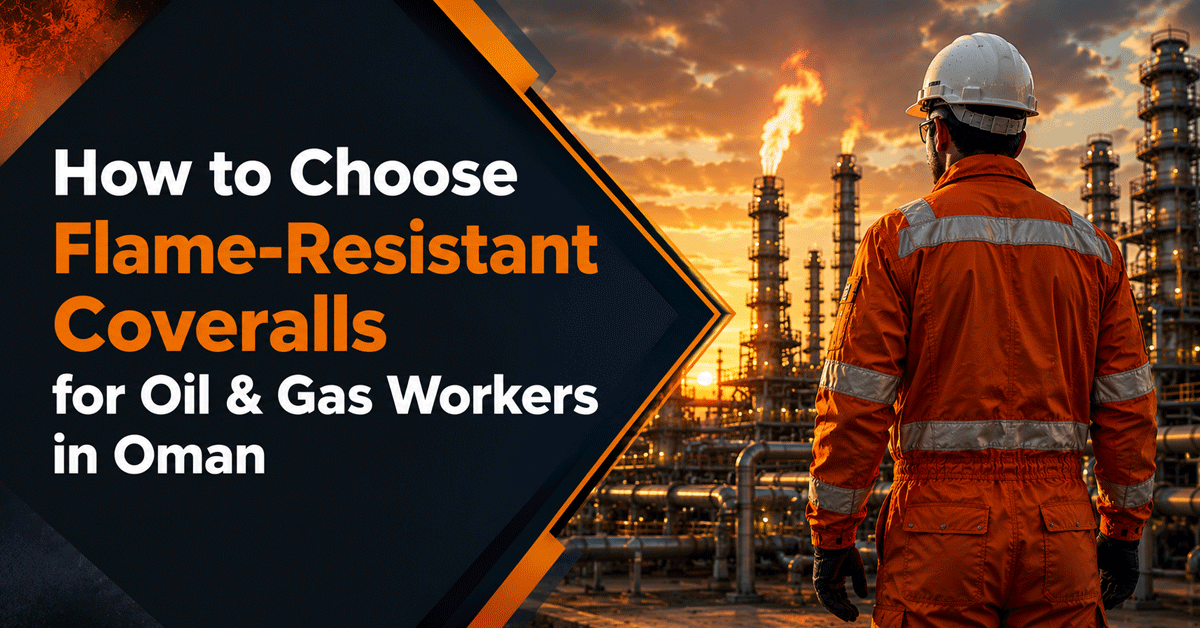
Personnel in the oil and gas industry in Oman often have to operate under conditions that involve heat, open flames, electric sparks, and chemicals. Normal work clothes are not enough when working in these conditions. Selecting appropriate flame-resistant coveralls in Oman may help you prevent serious injuries and set the highest safety standards in your workplace.
Flame-resistant coveralls are fireproof clothing that cannot ignite. They are common in drilling sites, refineries, offshore facilities, pipelines and industrial operations. However, not all coveralls are equally effective.
Choosing the most appropriate one involves taking into account factors such as job hazards, fabric type, certification, comfort, etc. This FR coveralls buying guide will help you learn what an oil and gas company needs to take into account before making their choice of protective work clothes. The oil & gas PPE in Oman is a demanding industry and many companies like SAMS offer quality PPE and workwear solutions.
What Are Flame-Resistant (FR) Coveralls?
FR coveralls are an example of personal protective equipment that consists of specific textiles resistant to ignition due to contact with flames or high temperatures. In contrast to regular cotton clothing, fabrics used for making FR products stop burning when the source of ignition is no longer present.
FR coveralls contribute to the safety of employees by:
-
Preventing the spread of flame on the clothing
-
Minimizing the risk of burns in case of flash fire
-
Protecting against thermal effects
-
Meeting workplace safety regulations
Employees involved in oil and gas extraction have to face such risks as hydrocarbon fires, electrical arcs, hot surfaces and welding. Appropriate FR coveralls become the necessary protection barrier between employees and the mentioned hazards.
The high-quality oil & gas workwear in Oman should provide a proper combination of safety, durability and comfort as workers usually wear coveralls for many hours in warm climate conditions.
Safety Standards to Look For
When selecting FR coveralls, certifications are one of the most important factors. Approved standards confirm that the garment has been tested for specific hazards.
ISO 11612
ISO 11612 coveralls are designed to provide protection for workers from heat and flame exposure. This standard addresses protective apparel that is intended for use in industries where the wearer is exposed to:
-
Short flame contact
-
Heat convective
-
Radiant heat.
-
Conduction heat
-
Sparks of liquid metal.
ISO 11612 is a big need for a lot of oil and gas applications as it ensures that the coverall has been tested against international standards for heat and flame protection.
ISO 11611
ISO 11611 Protective apparel for use in welding and allied procedures
These coveralls will protect you from:
-
Molten metal spatters, small
-
Brief flame exposure
-
Radiation from heat of welding operations
Workers participating in fabrication, maintenance and repair work may require ISO 11611-certified clothes.
NFPA 2112
NFPA 2112 coveralls are specifically developed for workers exposed to industrial flash fire hazards. This standard is widely recognized in the oil and gas sector, especially where sudden fire events can occur. NFPA 2112-certified coveralls are tested for:
-
Flame resistance
-
Thermal protection
-
Heat transfer performance
-
Garment durability
When choosing PPE, businesses that operate in high-risk oil and gas environments frequently consider NFPA 2112 compliance.
EN 1149 (Anti-Static)
Static electricity poses potential hazards when flammable gases or vapors are present. Anti-static clothing made according to the EN 1149 standard prevents the accumulation of static charge. The anti-static feature is very helpful for:
-
Refineries
-
Fuel storage areas
-
Chemical plants
-
Gas processing facilities
ARC Rating (Where Applicable)
Arc-rated coveralls are made to protect workers from the dangers of electrical arc flash. The Arc Thermal Performance Value (ATPV) is a measure of the degree of protection against exposure to arc energy. Workers involved in electrical maintenance should select coveralls with the correct arc rating, based on the risk assessment of their workplace.
How to Choose the Right FR Coveralls
Selecting the correct coveralls requires more than choosing a certified product. The garment should match the working environment and the specific risks involved.
Match the Hazard Level
Each worksite has its own safety hazards. Before buying FR coveralls companies should consider possible risks.
Think about:
-
Flash fire hazards
-
Dangers of Electricity
-
Welding jobs
-
Chemical exposure
-
Heat figures
-
Weather conditions outside
Protection needs may vary depending on the type of work being performed for example, someone working on an offshore oil platform may require different protection than a worker in a regulated maintenance area. A good danger assessment helps make sure workers get the right protection, but no more restriction than they need.
Select the Right Fabric
Fabric choice affects protection, comfort, and durability. Common FR fabrics include:
Cotton FR blends:
These provide comfort and are suitable for many industrial environments. They are breathable and practical for long working hours.
Aramid fabrics:
These offer strong heat and flame protection. They are often used in higher-risk applications.
Modacrylic blends:
These fabrics offer flame resistance along with comfort and softness. The choice of fabric depends on the working environment, climatic conditions and level of certification needed.
In Oman breathable fabrics are of utmost importance due to its hot environment.
Ensure Proper Fit
Correct fitting is essential for both safety and comfort.
Coveralls should:
-
Allow free movement
-
Avoid excessive looseness
-
Cover the body properly
-
Fit comfortably over other PPE
Loose coveralls may pose a risk in the workplace but overly tight clothes could hinder one’s movement. Employees require sufficient room to move, climb, bend and perform other physically strenuous tasks.
Consider Breathability
Oman has a hot climate and many oil and gas workers operate outdoors. Poorly designed workwear can cause discomfort and reduce productivity.
Look for FR coveralls with:
-
Breathable fabric construction
-
Features of Moisture Management
-
Smooth inside surfaces
-
well-ventilated areas
Comfort shouldn’t mean sacrificing safety, but well-designed protective clothing helps workers wear it correctly throughout their shift.
Check Visibility Features
Many oil and gas sites operate in areas with heavy equipment, vehicles and low-light conditions. Workers wear reflective strips and other high-visibility gear so they can be seen.
Visibility is especially important to:
-
Pipeline workers
-
Night workers
-
Remote teams
-
Plant maintenance workers
Verify Certifications
Before purchase read the product label and certification paperwork.
A good provider will inform you about:
-
Standards for safety
-
Material composition
-
Results of tests
-
Manufacturer’s information
-
Care information
Companies can also work with an experienced PPE provider such as SAMS to obtain certified protective apparel that fits their operation.
Choosing Coveralls by Job Role
Different oil and gas roles involve different workplace hazards. The ideal coverall depends on the worker’s daily tasks.
Drilling Operations
Drilling teams encounter many hazards including hydrocarbons, heat, machinery and changeable weather conditions.
Recommended features:
-
NFPA 2112 compliance where applicable
-
Robust fabric fabrication
-
Heavy-use areas reinforced
-
Made for lengthy shifts.
Refinery Workers
Refinery workers work around flammable materials, high heat and processing machinery.
Proper coveralls should provide:
-
Resistance to flame
-
Static electricity protection
-
Chemical resistance as required
-
Good movement.
Pipeline Maintenance
Pipeline maintenance workers work long hours outside and are exposed to mechanical and environmental hazards.
Key aspects are
-
Weather-resistant construction
-
High profile.
-
Heavy durable stitching
-
Comfort fit
Offshore Workers
Offshore workers are far from help and need reliable PPE. Offshore FR coveralls should offer:
-
Flame protection strong
-
Corrosion-resistant elements.
-
Suitable clothing for hot and humid environments
-
Offshore safety requirements' compliance
Plant Maintenance Teams
Maintenance professionals do a wide range of duties, including welding, electrical work and equipment repairs.
They may want their overalls:
-
Arc flash safety
-
Welding screen
-
Antistatic characteristics
-
Flexible movements
Coverall Care and Maintenance
Proper maintenance ensures the protective features of FR coveralls are maintained. The worker should use the manufacturer’s directions attentively.
General care advice includes:
-
Wash clothes as advised
-
Don’t use unapproved bleach products
-
Check coveralls frequently
-
Repair damaged areas using approved methods.
-
Store clothes in a clean dry area.
Oils, chemicals and dirt can influence the performance of a garment. Regular inspections might help you uncover potential problems before they become safety issues.
When Should You Replace FR Coveralls?
Replace FR coveralls when they no longer provide reliable protection.
Signs that a replacement may be necessary include:
-
Scorch marks or ruined cloth
-
Torn pieces
-
Heavy pollution
-
No reflective strips
-
Damaged seals
-
Decreased fabric strength
Even if the coverall looks acceptable, continuous washing and industrial use may impair performance over time. The companies should provide replacement schedules depending on consumption, working conditions and manufacturer recommendations.
Flame-Resistant Coveralls FAQs
Are FR coveralls mandatory for oil and gas workers in Oman?
FR Coveralls are also a safety measure that many oil and gas firms need. Requirements will vary according to dangers in a workplace, company regulations and safety standards.
What is the difference between normal coveralls and FR coveralls?
Regular coveralls offer basic protection against dirt and small risks during work. FR coveralls are manufactured from specific fabrics that are flame-resistant and help to reduce injury from heat.
Are NFPA 2112 coveralls suitable for Oman oil and gas industries?
Commonly used for flash fire protection in industries where fire threats are present. NFPA 2112 coveralls. Companies need to validate requirements as per their own risk assessment.
How long do flame-resistant coveralls last?
Life span depends on the quality of the cloth, working circumstances, cleaning techniques and frequency of usage. It has to be checked often to keep workers safe.
Can FR coveralls be washed normally?
Wash FR coveralls according to the manufacturer's directions. The wrong washing approach may damage protective efficacy.
Final Thoughts
Flame-Resistant Coveralls in Oman are a good option keeping in mind hazards present at the workplace, norms of safety, quality of fabric and comfort of workers. Oil and gas firms should choose licensed clothing that will serve their operational needs, be it drilling, offshore, refinery operations or maintenance duties.
SAMS is a trusted supplier of PPE to help Omani firms discover the right oil & gas PPE to keep workers safe and comply with industry norms. Choosing the correct FR coveralls is a safety decision and a crucial part of building a stronger workplace safety culture.