
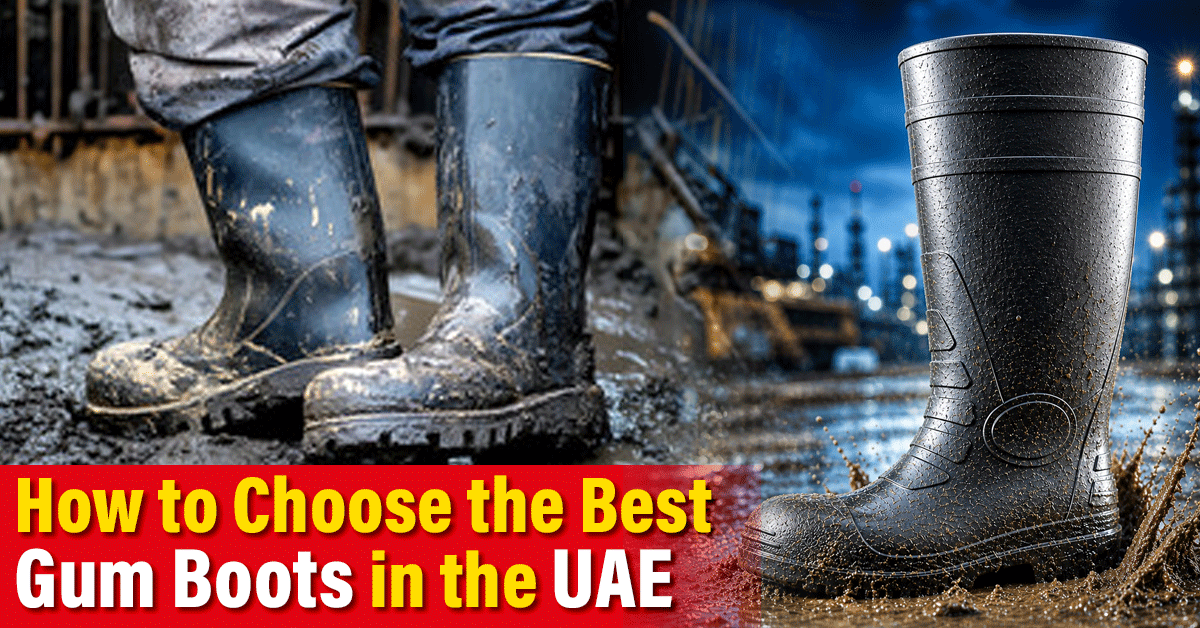
The UAE has many large building sites. It also has major oil rigs, food plants, and marine ports. Because these big projects move at a very fast pace, workplace safety is a top goal for managers. Therefore, when your crew is employed in wet or grimy zones, choosing the best footwear is essential. Specifically, a good set of gum boots is an excellent protect alongside slick floors, chemical spills, and heavy falling objects. However, purchasing heavy waterproof boots concerns more than choosing a cheap plastic alternative. This choice requires a clear view of local work laws. You must also think about extreme hot weather and smart boot design. Consequently, buying the wrong boots can easily lead to bad slip accidents, painful heat rashes, or failed site safety checks. This simple guide helps managers choose the best industrial gum boots in the UAE. We will look at official safety rules, hot weather needs, and key design choices. By learning these basic facts, you can protect your team and keep your shop fully compliant.
The Core System: How a Gum Boot Protects Workers
To build a good safety plan, you must know that a protective boot does not work alone. Instead, it is a key wearable part of your team's Personal Protective Equipment (PPE) setup. Therefore, let us look at the vital parts that make a professional gum boot work:
-
The Outer Shell: This waterproof layer uses thick rubber or PVC fabric. It wraps tightly around the feet and lower legs to block liquids.
-
The Safety Toe Cap: This hard front shield uses steel or composite materials. It protects toes from heavy items that drop or roll.
-
The Anti-Slip Sole: This deep tread pattern uses special grip compounds. It cuts down the risk of slips on oil or mud.
-
The Midsole Plate: This puncture-proof layer is built into the bottom of the boot. It stops sharp nails from piercing the foot.
When an employee steps into an extreme puddle of oil or water, the boot blocks the liquid from touching the skin. Furthermore, it increases impact protection if an instrument falls onto the foot. This smart design reduces the risk of bone breaks and chemical skin burns. Therefore, standard sneakers are completely banned on busy industrial sites because they cause severe risks to your crew.
A large logistics company in a major port in Abu Dhabi posed a significant safety dilemma. During a busy night shift, the spill of a large pipe carrying seawater and heavy industrial grease caused a pool of the greasy solution to pour across a large concrete loading dock. Luckily, the ground technician working on this dock was equipped with a top-of-the-range pair of PVC gum boots (with an S5 safety rating).
As he moved over the slick area to turn off the principal pipe valve, the great outer flattens gripped the greasy surface perfectly. Rapidly, an intense steel wrench slid off a extreme table and got directly on his foot. Thanks to the integrated steel toe cap, the heavy tool bounced off without leaving a single scratch. Consequently, the worker suffered zero injuries, and the port team cleared the mess without any work delays. This real case proves that buying certified boots saves lives.
Regulatory Standards and UAE Compliance
Buying work boots in the UAE requires strict attention to international rules. When you check safety suppliers, checking certified compliance labels is absolutely imperative.
International Testing Certifications
Every professional gum boot used in the UAE must meet clear rules. Look for products that feature the EN ISO 20345 mark. This mark is the standard European badge for protective safety footwear. Alternatively, products can carry an official ASTM stamp, which is the American standard. These labels prove the boot passed tough lab tests to withstand heavy crushing forces and sharp impacts.
UAE Safety Codes and Guidelines
Workplace safety laws are very strict across the country. The Ministry of Human Resources and Emiratisation (MoHRE) handles safety compliance under federal laws. In addition, local city groups add extra safety rules. These are areas, for example, where Dubai Municipality Safety recommends suitable footwear in construction areas. Abu Dhabi Public Health Centre enforces safety rules for fieldwork.
And all other major oil zones, like ADNOC, demand third-party inspection for all safety equipment. Since violating these regulations can result in hefty administration penalty or a stop-work order, you are obligated to purchase inspected shoes.
|
Feature Criteria |
Basic Waterproof Boots |
Premium Safety Gum Boots |
|
Primary Certification |
Simple rain boot / No mark |
EN ISO 20345 (S4 or S5 rating) |
|
Toe and Sole Shielding |
None |
Steel or composite toe and midsole plate |
|
Best Workspaces |
Light gardening, simple cleaning |
Oil rigs, chemical plants, concrete sites |
|
Interior Lining |
None or thin cotton |
Moisture-wicking mesh with anti-fungal treatment |
Key Features for the UAE's Hot Climate
The weather in the UAE features high summer heat that easily goes past 45 degrees Celsius. Air humidity is also very high along the coast. Therefore, selecting a gum boot requires careful attention to materials that keep feet cool and dry.
1. Breathable Lining and Moisture Control
Heat stress and sweaty feet are critical dangers for industrial workers in the Middle East. That's why a thick, treaded boot with heavy, non-breathing walls is no good. Moisture trapped within the walls creates painful blisters and fungal infections of the skin at a rapid rate. Instead, seek out models that have features like lightweight moisture-wicking mesh linings. Leading manufacturers employ moisture-wicking and fast-drying interior fabrics for a dry, cool interior environment.
2. UV-Resistant Outer Compounds
The fierce Arabian sun blasts strong sun radiation every day. Long-term sun exposure destroys generic rubber, causing the boot to harden, crack, and leak in secrecy. As a consequence, requisitors were recommended to buy PCV or PU compounds with built-in sun protection that could stand long-term sun damage, sustain longer flexibility, and prolong gear longevity.
3. Oil and Chemical Resistant Soles
Sometimes on the open road you will encounter high-humidity air, as well as moist salty air from the sea. This can cause the cheap boots to wear away more easily. This is also exacerbated by oil in the air, as the cleaning chemicals you use can actually eat away your rubber sole. Instead, check to make sure that outsoles are made of nitrile rubber or high-quality polyurethanes, which will work unaffected for a reliable feel in prolonged outdoor work shifts.
4. Lightweight Build and Ergonomic Fit
A heavy boot can exhaust a worker quickly while costing productivity. It's advisable to select designs using state-of-the-art lightweight materials such as PU rather than raw rubber, which is heavier. These shoes enable operators to wear them comfortably for long hours. For practical reasons, remember that the toes should move freely, but the heel should be comfortable and tight. You'll also find that high-quality shoes are often designed with green energy heels. This important comfort feature absorbs the energy from every step so safety personnel can reduce fatigue when operating on a hard concrete surface.
Conclusion: Making the Best Choice
To sum up, choosing the right gum boots is a smart investment for every industrial business in the UAE. The right pair improves worker safety, enhances comfort, and supports productivity in demanding environments. In highly regulated markets such as Dubai and Abu Dhabi, investing in certified EN or ASTM safety footwear helps businesses meet compliance requirements while reducing the risk of workplace injuries.
Modern gum boots with breathable linings, UV-resistant materials, and corrosion-resistant safety toe protection provide long-lasting performance in challenging conditions. For reliable, certified industrial footwear, SAMS Solutions offers a wide range of high-quality gum boots designed to meet the needs of construction, oil and gas, manufacturing, logistics, and other industries across the UAE.
Gum Boots FAQs
How often should gum boots be checked in the UAE?
A quick visual inspection is required before every single work shift. Check for deep cuts, sole wear, or splits in the waterproof shell. If any holes are found, then replace the boot quickly to avoid chemical leaks.
Can you reuse a gum boot after a heavy tool drops on the toe?
If the boot contains a steel toe and there are no cracks, then the boot could be safe. If the cap remains dented or the outside tears open, then theboot must be replaced immediately. The dented cap pinches the foot, and the boot will not protect against the next blow.
What is the average lifespan of an industrial boot in the UAE?
A good quality pair of gum boots should last for 12-18 months. Unfortunately, the very hot sun and the intense work on the concrete all day reduce this time span. The outer tread should be replaced immediately if it becomes rounded.
How loose should gum boots fit on a worker?
Boots should fit close but not constrict the ankle and be loose enough for plenty of toe-wiggling room. If the boots are too loose, the heel will lift, leading to painful blisters, and if too tight, blood flow will suffer, and the feet will overheat rapidly.
Can we wash industrial gum boots to remove mud and oil?
Yes, you should wash them after each shift as they will get dirty and the chemicals will be harmful. Rinse and then wash the outside with fresh water along with some soap. Never use any aggressive chemical solvents as they will dissolve the protective rubber. Always leave to air-dry thoroughly in a shaded and well-ventilated indoor environment.