
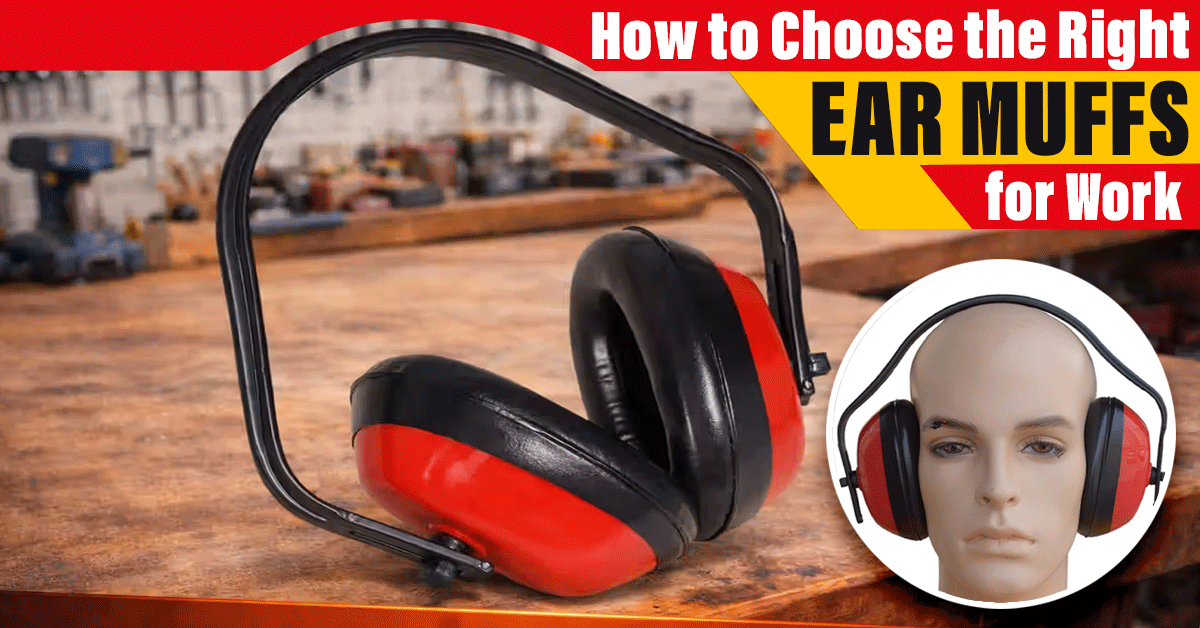
Loud noises at work can permanently damage your hearing. In fact, regular exposure to loud machinery and equipment can lead to irreversible hearing loss over time. That's why choosing the right hearing protection is essential before stepping onto any noisy job site.
Safety ear muffs are one of the most effective types of hearing protection because they completely cover your ears to reduce harmful noise levels. However, not every pair offers the same level of protection or comfort. Choosing the wrong ear muffs can leave your hearing at risk or block important sounds like warning alarms and coworkers calling for help.
This guide explains the most important features to look for when choosing safety ear muffs, helping you find the right balance between hearing protection, comfort, and workplace awareness.
1. Understand the Noise Reduction Rating (NRR)
When shopping for safety ear muffs, one of the first things you'll notice is the Noise Reduction Rating (NRR). This rating indicates how much noise the ear muffs are designed to reduce under controlled laboratory conditions.
However, real-world conditions are different. Factors such as movement, facial hair, safety glasses, or an improper fit can reduce the actual level of protection.
A simple way to estimate real-world protection is:
- Look at the NRR listed on the product.
- Subtract 7 from the rating.
- Divide the result by 2.
Example
If your ear muffs have an NRR of 29:
- 29 − 7 = 22
- 22 ÷ 2 = 11
This means the ear muffs will reduce the perceived noise level by approximately 11 decibels in everyday working conditions. For example, if a machine produces 100 dB of noise, your ears will experience roughly 89 dB.
Understanding the NRR helps you choose hearing protection that matches your work environment instead of simply selecting the highest number available.
2. Passive vs. Electronic Safety Ear Muffs
Modern hearing protection comes in two main types: passive ear muffs and electronic ear muffs. Each is designed for different work environments.
Passive Ear Muffs
Passive ear muffs use thick plastic ear cups and dense foam cushions to block noise. They contain no electronics or batteries, making them highly durable and reliable in dusty, wet, or harsh working conditions.
These ear muffs are ideal for environments with continuous noise, such as:
- Manufacturing plants
- Woodworking shops
- Warehouses
- Heavy machinery operations
If you're exposed to constant machine noise throughout the day, passive ear muffs are often the best choice.
Electronic Ear Muffs
Electronic ear muffs use built-in microphones and speakers to allow safe sounds—such as conversations, footsteps, and warning signals—to pass through while automatically blocking harmful noise.
The electronic system reacts almost instantly whenever loud sounds occur, helping protect your hearing without isolating you from your surroundings.
Electronic ear muffs are ideal for jobs involving sudden or intermittent loud noises, including:
- Construction sites
- Maintenance work
- Shooting ranges
- Airports
- Mechanical workshops
They provide excellent hearing protection while allowing you to stay aware of your environment.
Why Choosing the Right Type Matters
A maintenance manager noticed that workers in a repair yard were struggling to hear approaching forklifts and warning alarms. After inspecting their equipment, he found they were wearing heavy-duty passive ear muffs with an NRR of 31.
Although the repair yard wasn't loud enough to require maximum noise reduction, the workers' ear muffs blocked nearly every surrounding sound, including backup alarms and coworkers shouting warnings.
The company replaced the heavy passive ear muffs with electronic models. The new hearing protection continued to reduce engine noise while allowing important sounds like vehicle horns, warning signals, and conversations to remain audible.
Within a few weeks, workplace near-miss incidents dropped significantly.
. Prioritize Comfort for All-Day Wear
Even the best hearing protection won't help if it's uncomfortable to wear. Since many workers wear safety ear muffs for several hours at a time, comfort is just as important as noise reduction.
Cooling Gel Ear Cushions
Budget ear muffs often use basic foam cushions covered with vinyl. While affordable, these cushions can trap heat and sweat, making them uncomfortable during long shifts or in hot working environments.
Premium safety ear muffs feature cooling gel ear cushions that help reduce heat buildup and provide a softer, more comfortable fit throughout the day.
Adjustable Dual-Rail Headbands
Low-quality ear muffs often have a single rigid headband that creates pressure on the top of your head, leading to discomfort and headaches.
Look for adjustable dual-rail or padded headbands that distribute pressure more evenly. These designs improve comfort and reduce fatigue during extended use.
Non-Conductive Construction
If you work around electrical equipment or live electrical panels, choose ear muffs made from non-conductive materials. Plastic-only designs help reduce the risk of electrical hazards, making them a safer choice for electricians and maintenance professionals.
Quick Feature Comparison
| Feature | Entry-Level Ear Muffs | Premium Industrial Ear Muffs |
|---|---|---|
| Ear Cushions | Basic Foam | Cooling Gel Cushions |
| Hearing Technology | Passive Noise Blocking | Electronic Sound Pass-Through |
| Headband | Single Plastic Band | Adjustable Dual-Rail Headband |
| Construction | May Include Metal Components | Non-Conductive Plastic Design |
| Comfort | Suitable for Short Use | Designed for All-Day Comfort |
4. Make Sure They Work with Your Other PPE
Most workers don't wear hearing protection alone. Safety ear muffs are usually worn alongside:
- Safety helmets
- Safety glasses
- Face shields
- Respirators
- Dust masks
Poor compatibility can reduce both comfort and protection.
Traditional over-the-head ear muffs may press against the arms of safety glasses, creating uncomfortable pressure points. More importantly, the glasses can break the seal around the ear cushions, allowing harmful noise to enter.
To avoid these problems, consider:
- Cap-mounted ear muffs that attach directly to compatible safety helmets.
- Behind-the-neck designs that fit comfortably with face shields and other head protection.
- Low-profile ear cups that work better alongside safety glasses.
Choosing hearing protection that integrates well with your other PPE ensures maximum comfort, safety, and effectiveness throughout the workday.
Top Features to Look for in Safety Ear Muffs
When comparing different models, look for these important features:
- Appropriate Noise Reduction Rating (NRR)
- Comfortable cooling gel ear cushions
- Adjustable padded or dual-rail headband
- Passive or electronic hearing protection
- Lightweight construction
- Durable materials
- Helmet compatibility
- Non-conductive design (for electrical work)
- Replaceable ear cushions
- ANSI or EN 352 safety certification
Selecting ear muffs with these features helps ensure long-lasting comfort and reliable hearing protection.
Safety Ear Muffs FAQs
What does the NRR rating mean?
The Noise Reduction Rating (NRR) indicates how much noise the ear muffs can reduce under laboratory testing conditions. A higher NRR generally provides greater noise reduction, but actual performance depends on proper fit and workplace conditions.
Can ear muffs block too much noise?
Yes. Ear muffs with a very high NRR can sometimes reduce your ability to hear warning alarms, vehicle horns, or coworkers. It's important to choose hearing protection that matches the noise level of your workplace rather than simply selecting the highest NRR available.
How do electronic ear muffs protect my hearing?
Electronic ear muffs use built-in microphones to allow safe sounds, such as conversations and warning signals, to remain audible. When loud noises occur, the electronics instantly reduce or block harmful sound levels, protecting your hearing while maintaining situational awareness.
Why do cheap ear muffs cause headaches?
Many low-cost models use rigid headbands that apply uneven pressure to your head. Premium ear muffs feature adjustable padded or dual-rail headbands that distribute pressure more evenly, making them much more comfortable for extended use.
How often should I replace the ear cushions?
Inspect the ear cushions regularly and replace them whenever they become hard, cracked, or damaged. For workers who wear ear muffs daily, replacing the cushions approximately every six months helps maintain comfort and proper noise protection.
Final Thoughts
At SAMS Solutions, choosing the right safety ear muffs involves more than simply selecting the highest Noise Reduction Rating. The best hearing protection combines effective noise reduction with long-term comfort, durability, and awareness of your surroundings.
Whether you work in construction, manufacturing, maintenance, woodworking, or any other high-noise environment, investing in high-quality safety ear muffs can help prevent permanent hearing damage while keeping you comfortable and protected throughout your shift.
By understanding the NRR, selecting the right type of ear muffs, prioritizing comfort, and ensuring compatibility with your other PPE, you'll be better equipped to choose hearing protection that meets the demands of your workplace.