
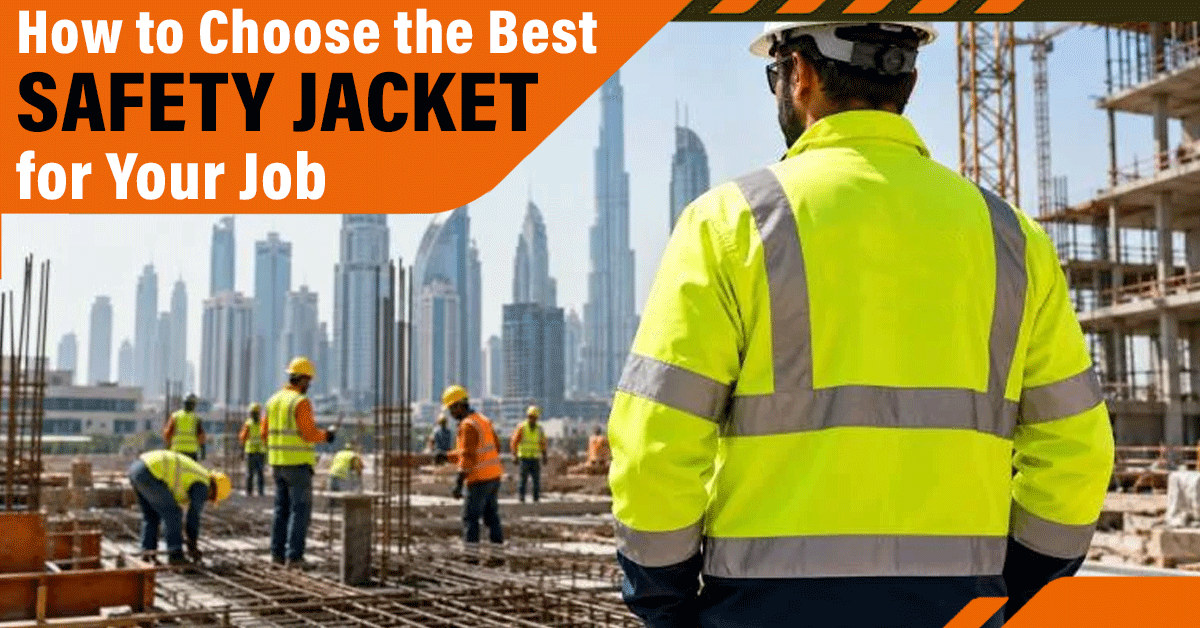
Intense safety jackets are your initial wall of defense on an occupied job site. For instance, you want them for road work, warehouse assignments, and emergency savings. Being seen is anything that keeps you active. In fact, driving equipment drivers cannot protect you if they do not observe you from afar. Therefore, picking an accidentally sunny coat from an essential retail store is not an intelligent move. As a replacement for, you must equal your gear to your precise everyday tasks to stay fully safe.
A safety jacket acts much more than just as a bright view in the day. For example, it guards you from touching cold winds, cold rain, and sharp metallic edges. But selecting the ideal model requires a clear knowledge of official safety rules. If you wear the incorrect class of jacket, you are placing your life in great danger.
This regular guide will show you just how to choose the greatest high-visibility safety jacket for your work.
1. Decode the ANSI Safety Classes
You need to look at the authorized safety classes before buying any new gear. The American National Standards Institute decides these narrow rules. This protection code breaks high-discernibility clothes into three evident tiers constructed on work risks and traffic paces.
Class 1: Low-Risk Work Zones
Class 1 jackets propose the smallest total of bright fabric and thoughtful tape. Specifically, they are constructed for off-road zones where traffic slowness stays well below 40 km/h (25 mph). Therefore, these garments are lightweight. As a result, they feel highly relaxed during long work shifts.
-
Best Use Cases: Use these for indoor storage warehouse staff, space lot workers, and sidewalk protection crews.
-
The Design Look: These mostly feature prime bright yellow or orange entrusts with a minimal stripe pattern available at the waist.
Class 2: Moderate-Risk Work Zones
Class 2 safety jackets are required if you work near live roads where traffic speeds faster than 40 km/h. Because the danger is much greater, these clothes feature far more environmentally friendly fabric. Additionally, they involve wider reflective bands around the shoulders and trunk to catch the driver's interest fast.
-
Best Use Cases: Ideal for railway crews, toll booth staff, efficiency installers, and airport ground players.
-
The Design Look: They give a clearer human outline from a distance than Class 1 items. Consequently, you stand out against busy backgrounds.
Class 3: High-Risk Work Zones
Class 3 jackets offer the fundamental highest level of visible safety. For this reason, they are needed for workers challenging fast traffic above 80 km/h (50 mph). They are also required when you work in zero-distinguishability weather, like dense fog or midnight storms.
-
Best Use Cases: Basic for highway construction sides, backup responders, and tow truck drivers.
-
The Design Look: These jackets should feature reflective tape progressing down the arms and legs. This position creates a full human effect for drivers as soon as you bend over to work.
2. Pick Your Color: Lime vs. Orange
High-visibility jackets rely on special bright effects that pop against dull backdrops. But you cannot objectively pick your preferred shade out of your personal favorite. Instead, you need to look at your work surroundings to prevent accidental camouflage.
Fluorescent Yellow Green (Lime)
Lime-green is presently the most accepted choice in modern industries. This selection exists because the human eye investigates this specific color wavelength best. For example, it sets out brilliantly beside gray concrete structures, black roads, and dark warehouse brickwork. However, if your crew works in a rural area surrounded by green trees, a lime jacket can mix right into the leaves.
Fluorescent Orange
Orange is the comprehensive color for caution. It signals danger and heavy buildings across the globe. Furthermore, it gives an excellent contrast alongside intense green woods and bright blue skies. Because of this beneficial feature, highway crews choose orange to match adjacent traffic cones and signs. As an answer, drivers immediately know that they are arriving at a live work zone and slow down.
The Costly Mistake
A yard boss observed that his night assembly members were continually unzipping their heavy, insulated Class 3 security jackets. The temperature in the rail grounds was freezing at -2°C. However, the workers were doing intense physical labor. For instance, they were switching heavy track switches and climbing onto train cars.
The Underlying Problem
To save money, the purchasing department had bought inexpensive, plastic-lined safety jackets to stop the winter wind. While the jackets were visually very bright, they entirely trapped the workers' body sweat inside. Within an hour, the workers' shirts became saturated with sweat.
To cool off, the crew took off their jackets completely. This bad practice hid the absorbed chest stripes. Accordingly, it puts them in danger of being hit by affected trains in the dark.
The Professional Fix
Administration quickly dragged the plastic-lined coats from service. As an alternative, they exchange them for advanced, modular safety jackets. These new layers featured a breathable, moisture-wicking outer shield and a removable fleece liner.
The new coats conceded sweat to escape, although still blocking the freezing wind. Following this momentary upgrade, the crew continued to wear their jackets zipped up entirely during their long night shifts.
Moreover, near-miss events in the dark yard dropped to zero. This litigation proves that fitting safety gear must balance graphical protection with physical comfort.
Safety Jacket Selection Table
|
Risk Level |
Traffic Speed |
Required ANSI Class |
Best Jacket Fabric |
|
Low Risk |
Under 40 km/h |
Class 1 |
Light polyester mesh for easy cooling |
|
Moderate Risk |
40 to 80 km/h |
Class 2 |
Solid tricot knit fabric to resist dirt |
|
High Risk |
Over 80 km/h |
Class 3 |
Heavy-duty Oxford nylon with insulation |
|
Extreme Wet |
Any Speed |
Class 3 Rainwear |
Coated waterproof outer shell |
3. Decide on the Right Material for Your Surroundings
Once you recognize your ANSI class, you must inspect the fabric build. Your job site requirements order how heavy and hard your coat needs to be.
-
Polyester Mesh: This ultra-light cloth is full of thousands of insignificant holes. It grants air to move freely, covering your body. Therefore, it is a satisfactory choice for hot asphalt paving or humid warehouse tasks.
-
Oxford Nylon: This is a thick, tightly knit fabric that resists heavy rubs and hard tool snags. It is also given with a water-resistant coating. Accordingly, it works completely for rugged winter monitoring or outdoor towing jobs.
-
Fire-Resistant (FR) Fabrics: If you work covering live wires or unstable gas lines, normal polyester is unsafe because it can melt onto your skin. Instead, you must buy specific flame-resistant safety covers that stop hurting fast during a fire spark.
Safety Jackets FAQs
Can I wash my safety jacket in a regular machine?
Yes, you can wash it at home, but you must prevent chlorine bleach and fabric softeners. Bleach destroys the intense dye in the fabric. As a result, it affects the jacket fade out fast. Furthermore, softeners leave a dull film over the absorbed bands, which totally destroys your nighttime safety.
How often should I replace my workplace safety jacket?
You must replace your safety jacket every six months if you wear it for daily outdoor labor. But if your employment is indoors, it can remain for up to a full year. Exterior damage can also shorten this time. Therefore, toss the covering out immediately if it gets protected in dark grease or fades away in the sun.
What is the contrast between a safety vest and a safety jacket?
A safety vest is a futile garment meant to be worn over light summer shirts. On the other hand, a safety jacket has full-length sleeves with absorbent bands. This shape is mandatory for Class 3 statutes because it creates an apparent human shape in low light.
Can I publish my company logo on my safety jacket?
Yes, you can print a logo, but you want to check the total size first. ANSI regulations state that company logos cannot cover up too much of the bright textile or reflective tape. Therefore, retain your logo small and place it on the upper right chest area.
Are all intense yellow jackets officially ANSI compatible?
No, they are not. A jacket can be examined as bright yellow but still fail to comply with official safety rules. True protection gear features a constant internal tag that states the ANSI Class rating. If there is no tag on the indoor collar, the fabric has not been examined.