
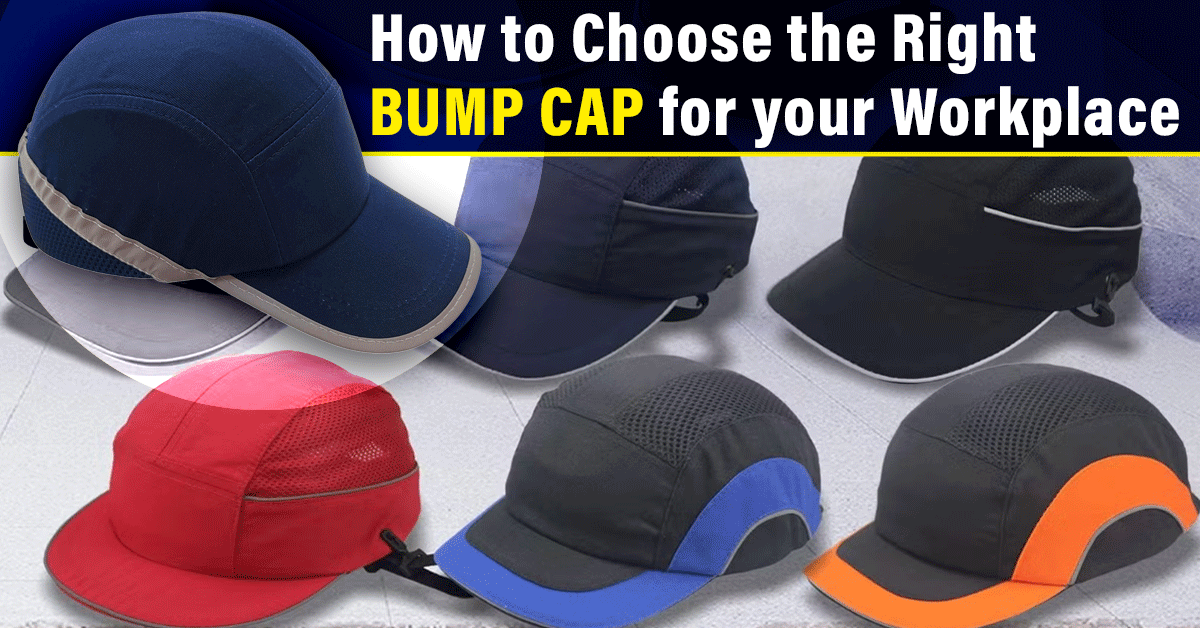
Selecting the right top protection is a key decision for any workplace protection manager. While many people automatically think of substantial industrial hard hats for safety, these massive helmets are regularly not needed at all. In reality, they tend to be more distress than they are valuable. If your team drives in restricted spaces, below vehicle chassis, or on low-hanging pipes, then a normal hard hat can severely restrict visibility and cause neck pain.
That is where an industrial swelling cap is perfect. They are typical baseball caps on the outside, but when held, they have a tough synthetic shell beneath. You need to assess your workplace risks, current basics, and safety principles to select the right safety kit for your team.
Bump Caps vs. Hard Hats: The True Difference
To choose which one to go for, you want to know what the distinction is between the two. Wearing the incorrect skull protection can result in injuries and be very expensive in fines. First of all, hard hats protect workers from falling, flying, or swinging objects.
If a heavy tool falls from a high shelf on a construction site, a hard hat takes up that substantial downward weight to save your life. Because of this heavy-duty shield, they are necessary by law on construction sites and heavy industrial plants.
On the other hand, bump caps only protect workers when they inadvertently bump their own heads into still, inactive objects. For example, if a worker works in a tight edge space or under a conveyor belt, a bump cap shields them when they hit a low steel beam instantly. They prevent painful cuts, bruises, and slight concussions. However, they do not safeguard against bodies falling from above. You should never use a collision cap where dropping objects are a risk.
Assess Your Specific Workplace Risks
Deciding the right cap varies entirely on your detailed work environment. Because every industry is completely different, you would focus on your everyday hazards.
If your team works inside tight machine gaps or narrow crawls, bulkiness is your biggest adversary. Hard hats regularly get struck off in these spaces because they protrude too far from the head. So, look for slim, low-profile collision caps that let workers move easily without cutting against low ceilings.
Electrical hazards involve a completely different approach. If your workforce are near live wires or exposed electrical panels, you should avoid caps with metallic parts. Even a tiny metal rivet or steel secure can conduct electricity to the head. Instead, select all-plastic shells to preserve workers utterly safe.
For hot or tropical areas, like busy warehouses or auto repair shops, heat strain is a major issue. Hot employees can get preoccupied easily, which leads to mistakes. So, good exposure to air is a top priority. In these projects, look for outer bonnets made with light, breathable weave fabrics that let heat escape easily.
Key Features to Check Before Buying
Once you recognize your specific hazards, you can compare different product features to get the best value.
-
The Inner Shell: This is the most crucial part of the cap. High-quality choices use tough plastics like high-density polyethylene (HDPE) or ABS. Make sure the shell also has an easy foam lining to cushion sudden impacts.
-
Brim Length: The front brim concerns how well a worker can see. Micro brims are fantastic for tight gaps where workers must look up often. Short terms offer a good balance of sight and shade. Long brims are satisfactory for outdoor workers who need limited protection from sun glare.
-
Cleaning and Care: Because workers sweat during long shifts, the fabric can get dirty and smell harmful quickly. Choose options with transferable, machine-washable outer caps and integral sweatbands to keep things fresh.
When we rotated out new head safety at our logistics hub, we noticed fast changes. Workers who used to complain about neck strain from heavy, powerful hats rapidly felt lighter and moved faster. They stopped taking off their safety gear throughout hot afternoons because the mesh plates kept them cool.
However, we had to teach everyone to spot the change between zones. SAMS put up clear signs at the entrance of areas where forklifts stack pallets high, reminding workers to switch back to hard hats. This mix of individual gear and clear rules significantly cut down our minor head wounds by over eighty percent in the very first year.
Bump Cap FAQ'S
Is a bump cap an alternative to a Hard hat?
No. A bump cap can't legally and safely serve as a hard hat. Hard hats are designed for falling objects; bump caps are only designed for fastening over stationary objects.
What is to say if my place of employment permits bump caps?
Testing your local safety precautions, you should carry out a hazard assessment. If there is no risk of objects being dropped, then a bump cap is usually suitable.
Do bump caps wear out?
Yes. Most big makers advise switching the ‘sunblocker’ after two or five years, depending on the flexible part, which becomes brittle with age and gradually gets weaker.
Is it possible to wash a bump cap?
Yes, if you wish, you can remove the plastic shell and wash the outer fabric hat in a normal washing machine.
Are there different styles of bump caps?
Most bump caps are designed with an adjustable rear ratchet wheel or hook-and-loop straps to make them comfortable and secure for individual head sizes.