
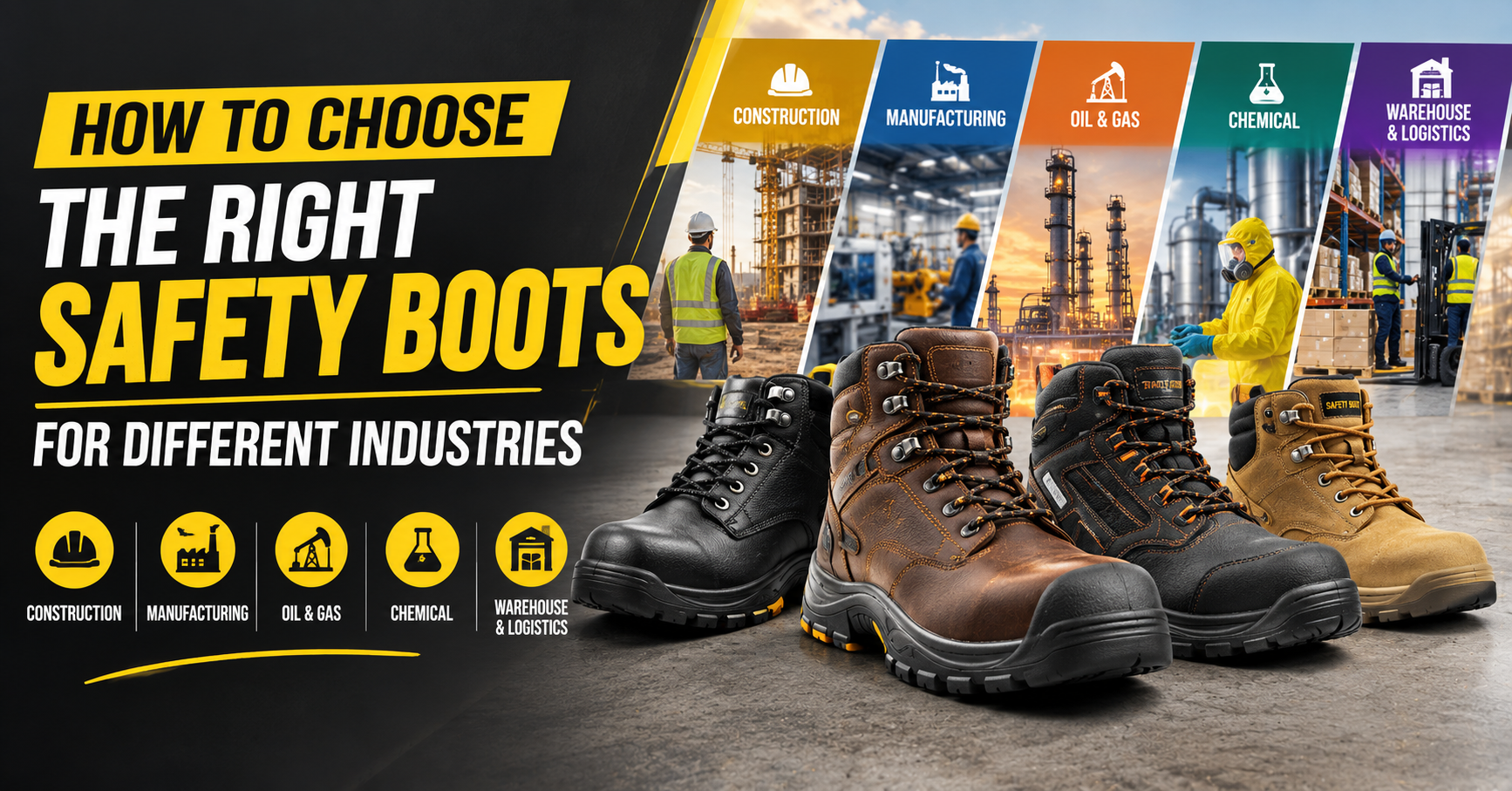

Each job site has its own physical risks to your feet. Grasping the conditions of working at a muddy construction site is vastly different from a factory floor paved with concrete. So, it is unsafe to wear ordinary footwear on high-risk jobs. Selecting appropriate safety boots not only safeguards your feet, but also helps prevent serious injuries and ensures all-day comfort.
It is important to wear the correct footwear for the particular risk to which you are exposed in the workplace. Cold weather boots can end up getting hot on hot asphalt. Similarly, if employees are in the warehouse for extended periods, heavy boots can lead to extra muscle fatigue. In this guide, you will learn how to select an ideal pair to your industry.
Types of Safety Boots
There are various special types of modern industrial shoes. Let's take a look at the most common ones that are in use in all the main sectors of the labor market today:
Steel Toe Safety Boots
Classic steel toe safety boots offer the highest protection from heavy falls. The steel cap protects your toes from falling objects and heavy equipment. Thus, they are suitable for demanding tasks, such as demolition and bulk construction duties.
Combination Toe Safety Boots
Nowadays, carbon fiber, plastic, or fiberglass caps are used on toe boots rather than metal. They are much lighter than the steel models and do not conduct heat or cold. This means that they will not set off metal detectors and will help keep your feet warm in cold environments.
Waterproof Safety Boots
Waterproof work boots made of durable, waterproof leather and breathable interior lining prevent water, mud, and rain from entering. Thus, they maintain the dryness and comfort of your feet during outdoor activities in wet weather.
Heat Resistant Safety Boots
The boots that are heat resistant are equipped with durable rubber soles that are designed to endure difficult conditions on the ground. They offer protection against burning surfaces on metal foundries, welding shops, and asphalt paving.
Electrical Hazard Safety Boots
Electrical hazard (EH) boots have non-conductive soles to protect against electric currents. This also gives electricians and utility workers a much-needed secondary safety net.
Metatarsal Safety Boots
Metatarsal boots have additional plates that cover the upper bridge of your foot. They are used to keep the delicate bones of the midfoot safe from falling rocks, steel beams, heavy concrete blocks, etc.
Best Safety Boots for Different Industries
Each field has unique safety needs to ensure workers' safety. If you're trying to find a heavy-duty work boot that's perfect for your job, here are some tips to help you pick the right pair.
Construction: Puncture-resistant steel plates, steel toe caps, and deep tread soles for uneven ground are required for construction workers.
Manufacturing: Factory workers should wear comfortable protective work boots with good composite caps and cushioned insoles to ensure they are comfortable for long periods of standing on hard concrete floors.
Offshore: Oil & Gas technicians need durable boots that have full chemical and oil resistance, and have solid slip resistance to ensure good boots and avoid bad falls on greasy decks.
Warehousing: Logistics staff value lighter, more flexible boot designs, ensuring the material is breathable and that the composite toe design allows for quicker movements.
Mining: They should wear a waterproof boot that has thick puncture-proof plates and is heavy-duty, as miners may come across sharp rocks and heavy tools.
Logistics: Delivery drivers require shock-absorbing, flexible safety shoes with non-slip soles to quickly load and get on the road.
Electrical Work: Utility crews need to wear certified electrical hazard (EH) boots with non-metallic composite caps to avoid shock hazards.
Processing: Processing employees need boots that are washable and waterproof with anti-slip rubber soles, to be able to safely move around on wet, soapy floors.
Here are some features to consider when choosing safety boots:
Assessing technical features will enable you to choose appropriate protective footwear for everyday activities:
-
For toe protection, consider steel for added heavy impact protection or composite for lightweight protection and thermal insulation.
-
Slip Resistance: Purchase shoes with certified SRC slip-resistant outsoles to ensure a good grip on slippery wet, oily, or icy surfaces.
-
Puncture-resistant: The steel or woven Kevlar midsoles will prevent any sharp nails or glass from penetrating the sole of the boot.
-
Extra Ankle Support: High-cut boots provide extra stability on uneven surfaces to avoid being twisted or falling.
-
Comfort: Find removable memory foam insoles and shock-absorbing midsoles to help minimize foot pain after extended working hours.
-
Breathability: Moisture-wicking linings draw sweat away from your body to keep your feet cool, dry and smelling good.
-
Durability: Check boots for attached rubber soles and substantial double stitching along areas of stress.
To Maintain Your Safety Boots
With proper care, you can make your work boots last longer and keep them fully protected on every shift: Brush off dried mud, concrete dust, and chemicals after each work shift with a firm brush—Clean Daily. Condition Leather: Regularly apply good leather conditioner to maintain soft, crack-free, and flexible leather. Dry Naturally: Air dry at room temperature, away from direct heaters or direct hot sun.
When to Change Safety Boots?
Even top-quality safety boots will wear out after heavy usage. If you see any of these signs, replace your boots right away:
|
Problem Sign |
Visible Damage |
Action Required |
|
Exposed Toe Cap |
Protective steel or composite cap is visible |
Replace boots immediately |
|
Smooth Outsole |
Tread pattern is worn flat or smooth |
Discard to prevent slipping accidents |
|
Cracked Sole or Leather |
Deep cracks let water and chemicals inside |
Replace with a fresh pair right away |
|
Crushed Interior Cap |
Internal toe cap feels dented after an impact |
Replace immediately for full safety |
Safety Boots FAQ'S
Which one is superior? Steel toe vs composite toe?
There is no one that is better; it all depends on the job site. Steel caps can withstand heavier impact weights, and composite caps are lighter, non-metallic, and warmer on the feet during cold weather.
Are safety boots waterproof?
Waterproof safety boots are not standard, as not every pair of safety boots is waterproof. Regular leather boots are good against light water splashes, but in heavy rain and deep mud, boots that are waterproof to the outside are required.
Are safety boots puncture-proof?
Yes, safety shoes with steel or Kevlar puncture-resistant midsoles keep sharp nails, screws, and broken glass from penetrating the sole of your foot.
Which safety rating will I select?
Check for boot labelling that has been tested and certified according to EN ISO 20345. Select S1P rating for dry indoor applications requiring puncture protection or S3 rating for outdoor applications requiring puncture protection.