
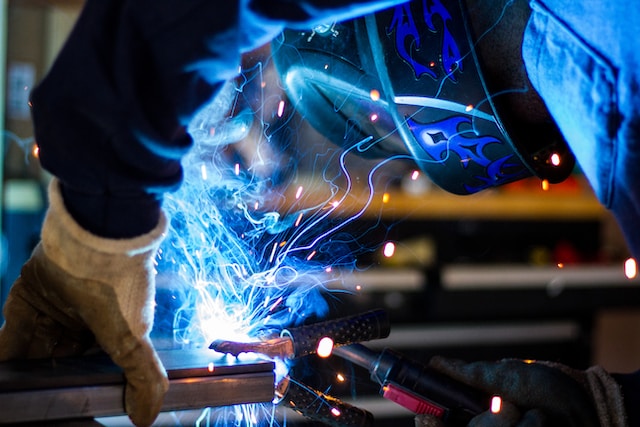
Welding goggles are essential safety gear in industrial workplaces. Welding goggles protect workers from harmful radiation, sparks, and flying debris. Therefore, they play a critical role in preventing serious eye injuries during welding tasks.
Moreover, welders face constant exposure to UV and infrared rays. These risks make proper eye protection a mandatory safety requirement in most industries.
Welding Goggles: Why They Are Essential
Welding creates extreme heat, bright light, and metal splashes. Therefore, workers need strong eye protection to avoid long-term damage. In contrast to regular glasses, welding goggles provide sealed protection around the eyes.
Additionally, they block harmful UV and IR radiation. Consequently, they help reduce risks like arc eye, burns, and corneal injuries.
Major Hazards in Welding Work
Welding environments expose workers to several serious risks. These hazards can cause both short-term pain and long-term vision damage.
Key hazards include:
- UV radiation exposure
- Infrared heat burns
- Flying sparks and metal particles
- Intense visible light glare
- Eye infections from debris
Furthermore, even brief exposure can lead to painful conditions like photodermatitis.
Key Features of Protective Goggles
Modern eye protection tools are designed with advanced safety features. Welding goggles often use heat-resistant materials and special filter lenses.
Important features:
- UV and IR protection lenses
- Impact-resistant polycarbonate glass
- Adjustable elastic straps
- Anti-fog coating for clear vision
- Full eye seal design
Moreover, these features improve comfort and reduce workplace accidents.
Types of Welding Goggles and Shade Selection
Different welding tasks require different lens shades. Therefore, selecting the correct shade is crucial for safety and performance.
| Welding Type | Recommended Shade | Application |
|---|---|---|
| Gas Welding | Shade 4–6 | Light welding tasks |
| MIG Welding | Shade 10–13 | Medium to heavy welding |
| TIG Welding | Shade 8–12 | Precision welding |
| Cutting Work | Shade 5–8 | Metal cutting operations |
Additionally, auto-darkening goggles adjust automatically to light intensity, improving efficiency and safety.
Benefits of Using Welding Goggles
Proper eye protection improves both safety and productivity in the workplace. Therefore, employers must ensure workers always wear protective gear.
Key benefits include:
- Prevents eye injuries and burns
- Reduces risk of long-term vision loss
- Improves worker confidence
- Ensures legal safety compliance
- Minimizes workplace downtime
Moreover, industries that enforce safety rules often report fewer accident cases.
How to Choose the Right Eye Protection
Selecting the right goggles depends on the type of welding work. Welding goggles should always match the task requirements.
Consider these factors:
- Type of welding process
- Required lens shade level
- Comfort and fit quality
- Anti-fog and ventilation features
- Certification standards (ANSI/EN approved)
Furthermore, workers should replace damaged goggles immediately to maintain safety.
Frequently Asked Questions (FAQ)
1. Why are welding goggles necessary?
They protect eyes from UV rays, sparks, and heat damage during welding.
2. Can regular safety glasses replace welding goggles?
No, regular glasses do not block radiation or provide full eye sealing.
3. What shade is best for welding goggles?
It depends on the process, but most tasks require shade 8–13.
4. How often should welding goggles be replaced?
Replace them when lenses scratch, fog, or lose clarity.
5. Are auto-darkening goggles better?
Yes, they improve visibility and adapt to changing light instantly.
Final Thoughts
Welding safety depends heavily on proper eye protection. Welding goggles remain one of the most important PPE items in any welding environment. Therefore, workers should never ignore their use during operations.
Moreover, consistent use reduces injury risks and improves long-term eye health. Consequently, both employers and workers must prioritize safety standards in every welding task.